 Walter Ponce
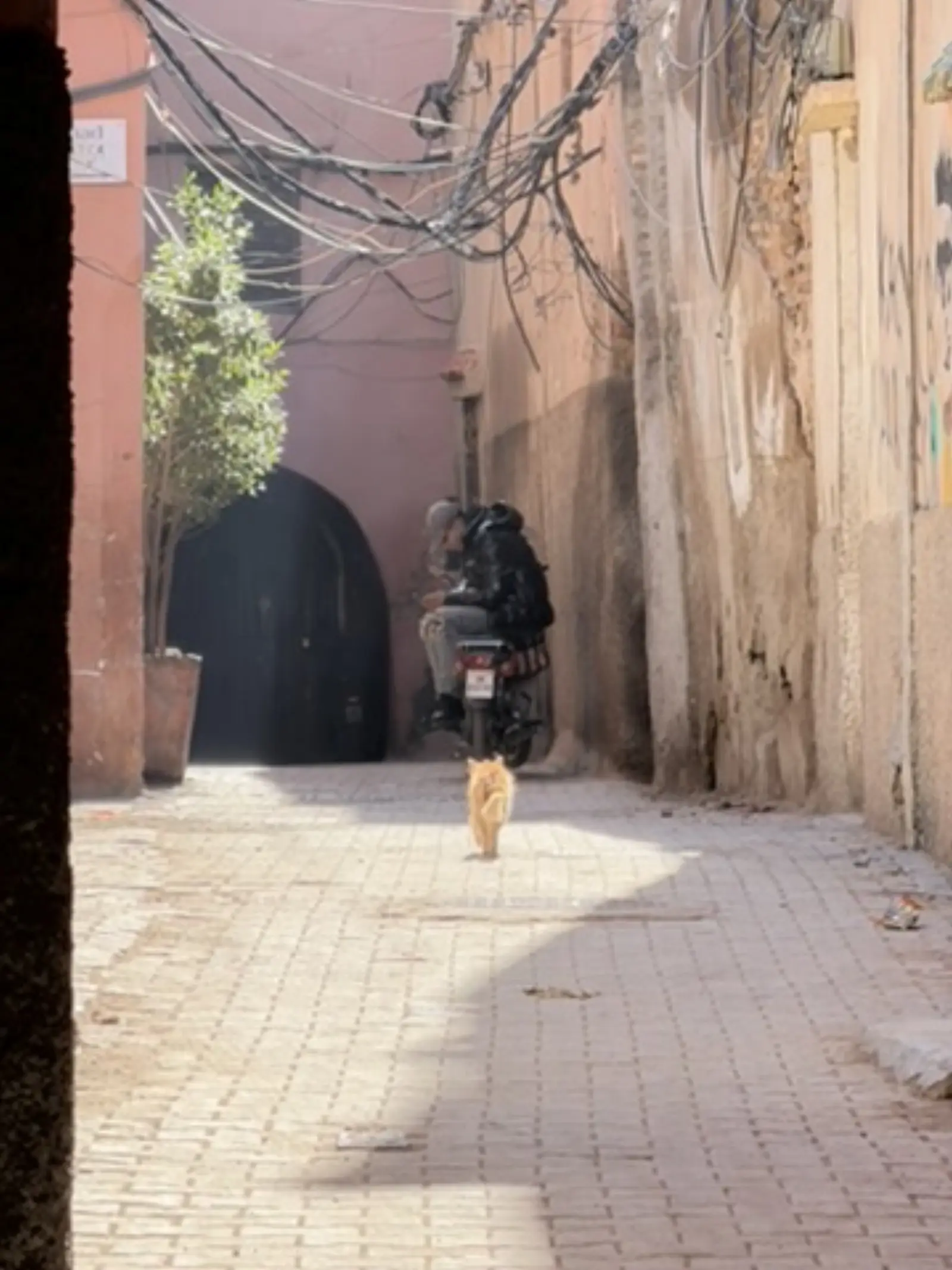
The medina in Marrakech is loud in the best way. Scooters, handcarts, spice sellers, somebody’s radio, a cat asleep in the middle of it all. Then you turn into a derb, walk thirty seconds down a lane barely wide enough for two people, push a heavy wooden door, and all of it stops.
That is the whole case for Riad Danka, and it is a strong one. We stayed in January, three nights, and the thing I kept noticing was the silence.
Finding the door, and the one real drawback
Riad Danka sits on Derb Aarjane, a few steps from Rahba Kedima, the small square where the spice and basket sellers set up. That is deep in the old city, with the souks starting more or less at the end of the street.
I am going to be straight about this, because it is the one thing I would want to know before booking: the location is the weak point. Not the riad, the location. Like most riads in the medina it cannot be reached by car, so taxis drop you at the nearest point a vehicle can get to and you walk the rest, and that walk is long and winding.
In daylight it is part of the experience. At night it is a chore. You get the full Marrakech routine on the way: people telling you the street ahead is closed, people offering to show you the way and then asking for money, people steering you towards a shop. Never threatening, but after a long day it is the last thing you want between you and your bed.
So book the airport transfer, ask the riad to meet you the first time, walk the route once in daylight before you have to do it in the dark, and be ready to keep saying no politely. Save the location offline too, because the lanes all look alike on day one and phone signal in the medina is not something to rely on.
Again: none of this is the hotel’s doing. It is where the medina put it.
The courtyard
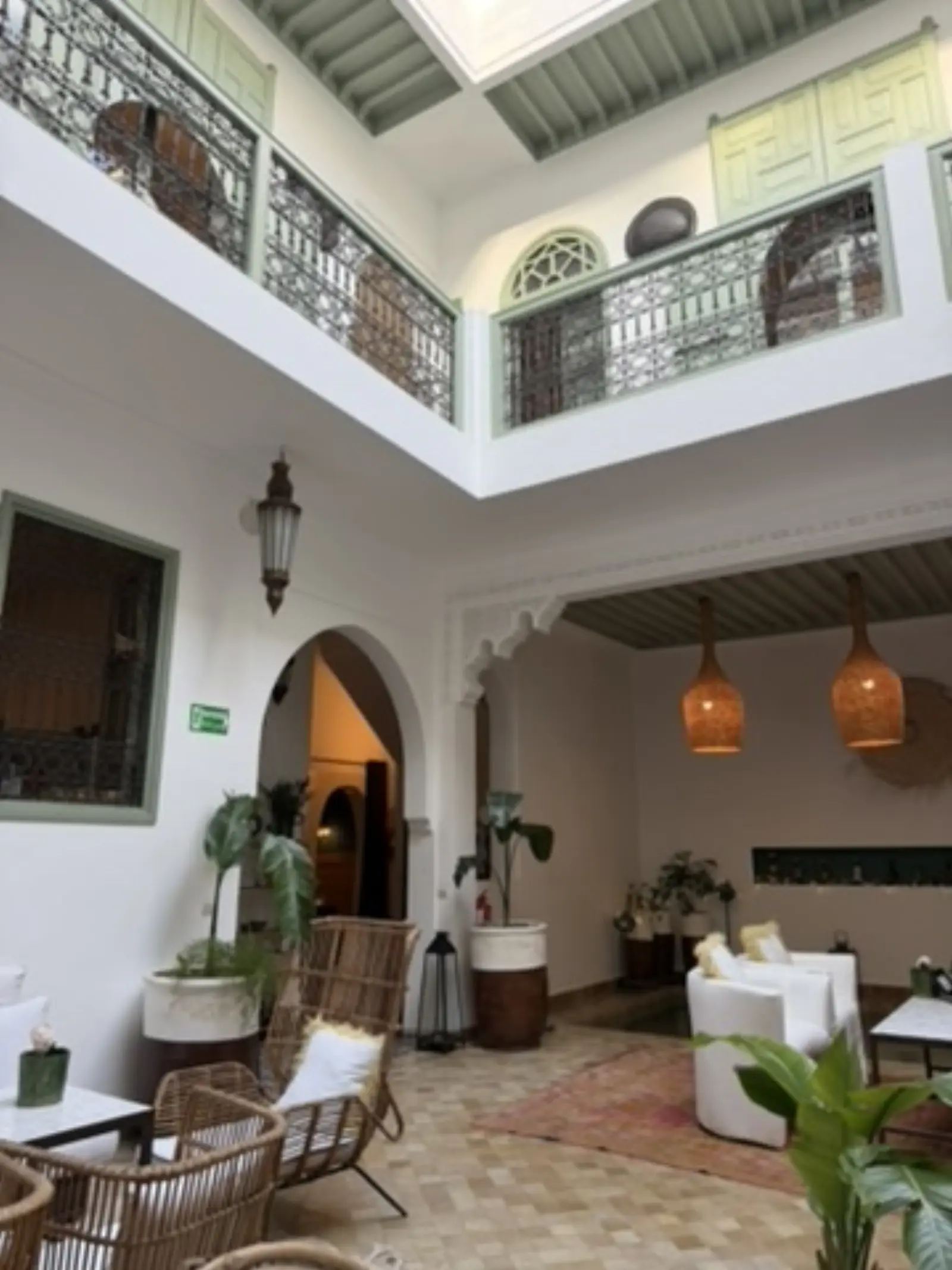
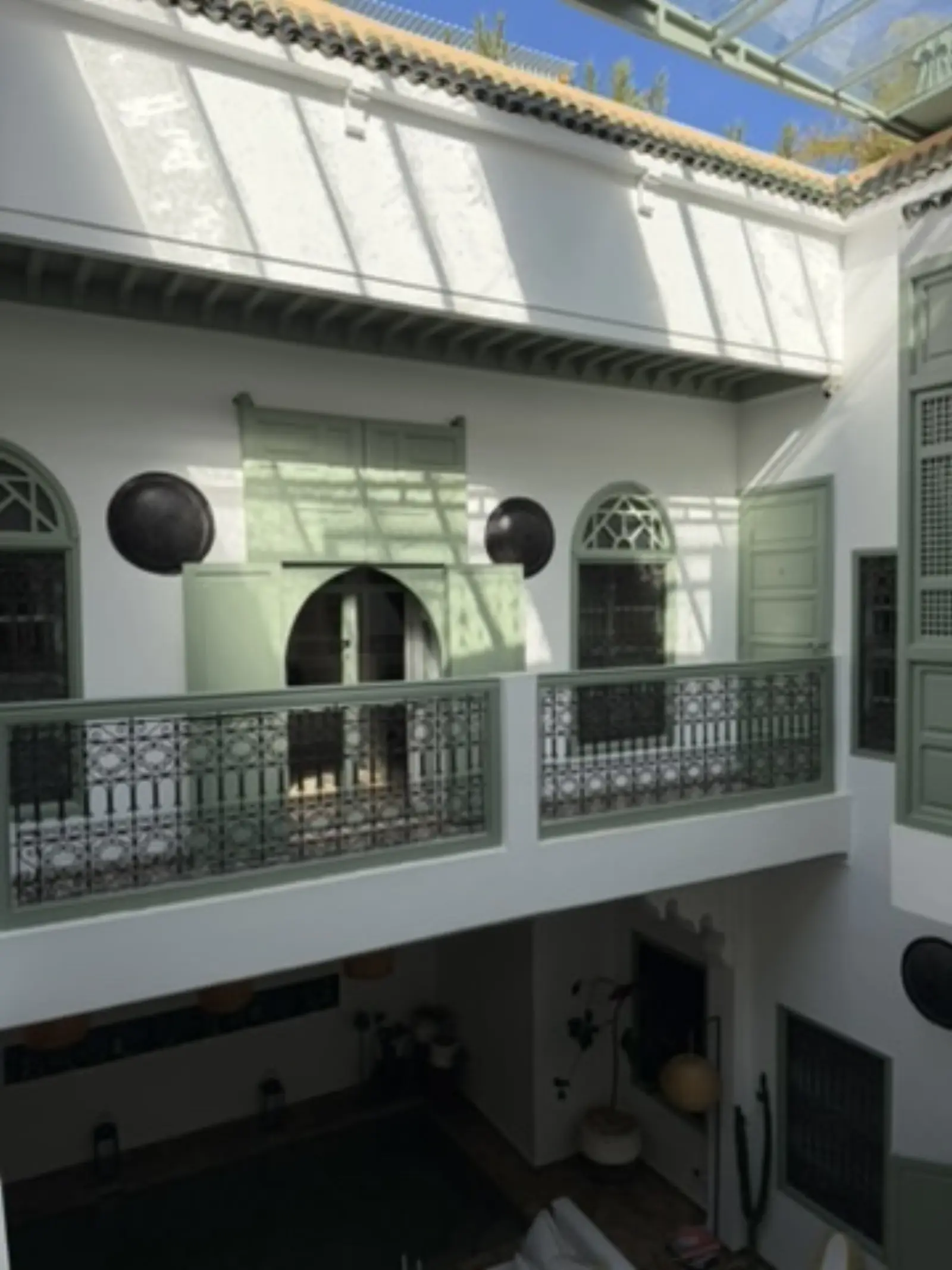
Inside, the riad is built the traditional way: rooms stacked around an open central patio, with a gallery running round the first floor and a terrace above that.
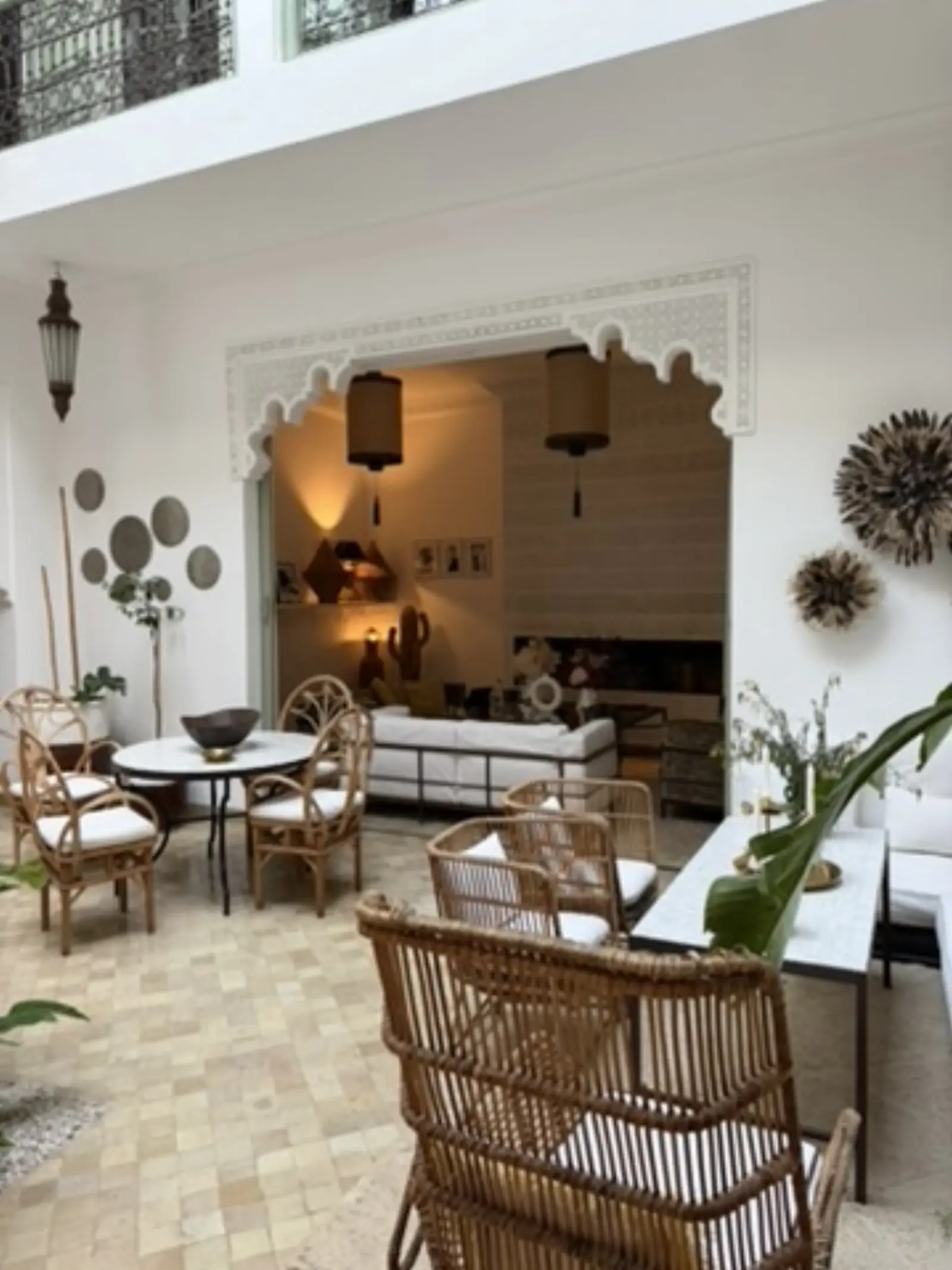
The detailing is restrained, which I liked. Pale green painted shutters and doors, black ironwork on the balustrades, white plaster, carved stucco over the arch into the salon, and a floor of small terracotta tiles laid in a herringbone pattern. No tourist-bazaar overload, no mosaic on every surface.
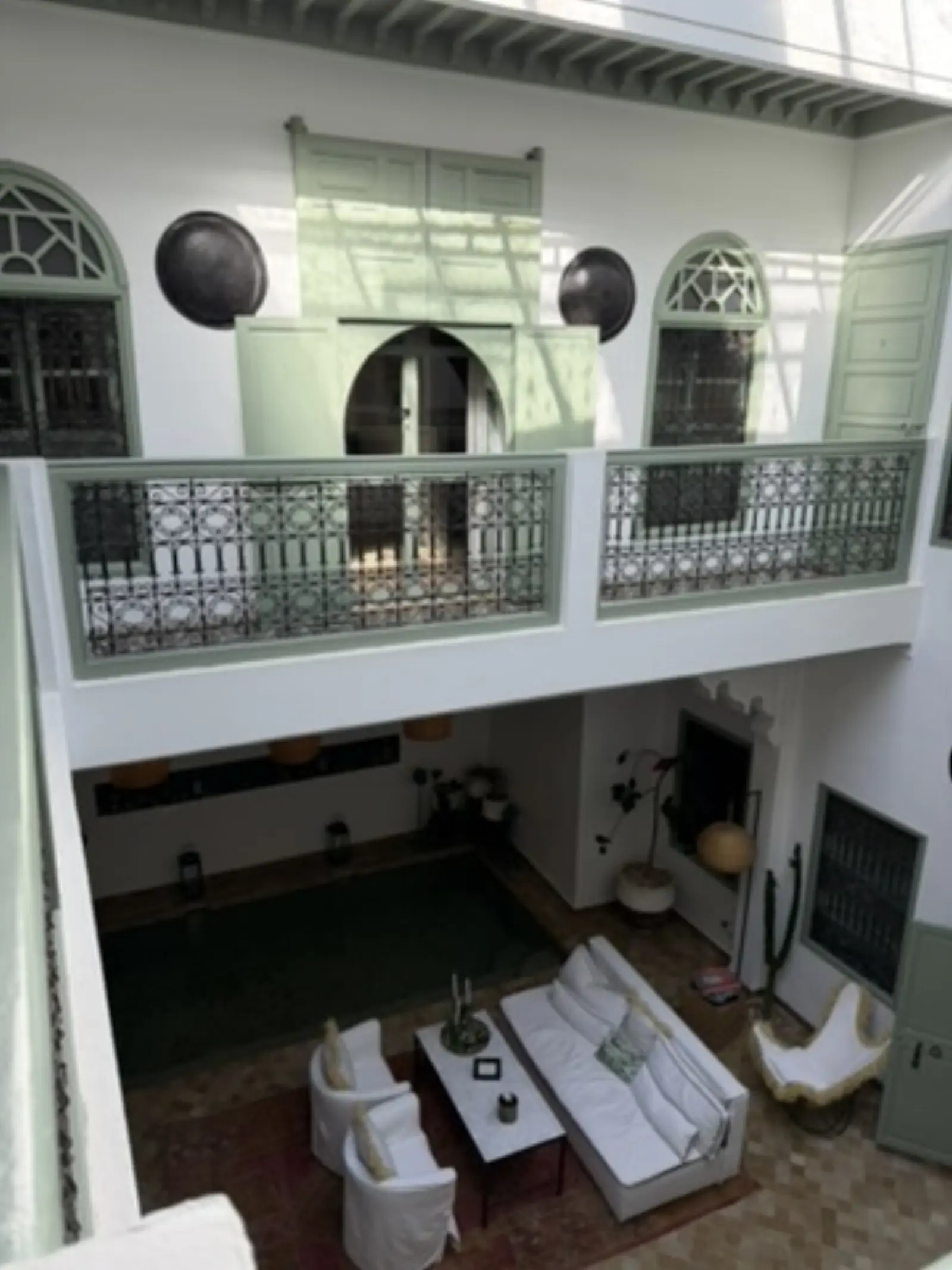
There is a plunge pool set into the courtyard floor, which in January is there to look at rather than to swim in, and a fireplace in the wall opposite. The seating is white, low and deep, with Berber rugs underneath and rattan chairs pulled up around a low table. Part of the roof above the patio is glazed, so the light comes down into the middle of the house all day without the cold coming with it.
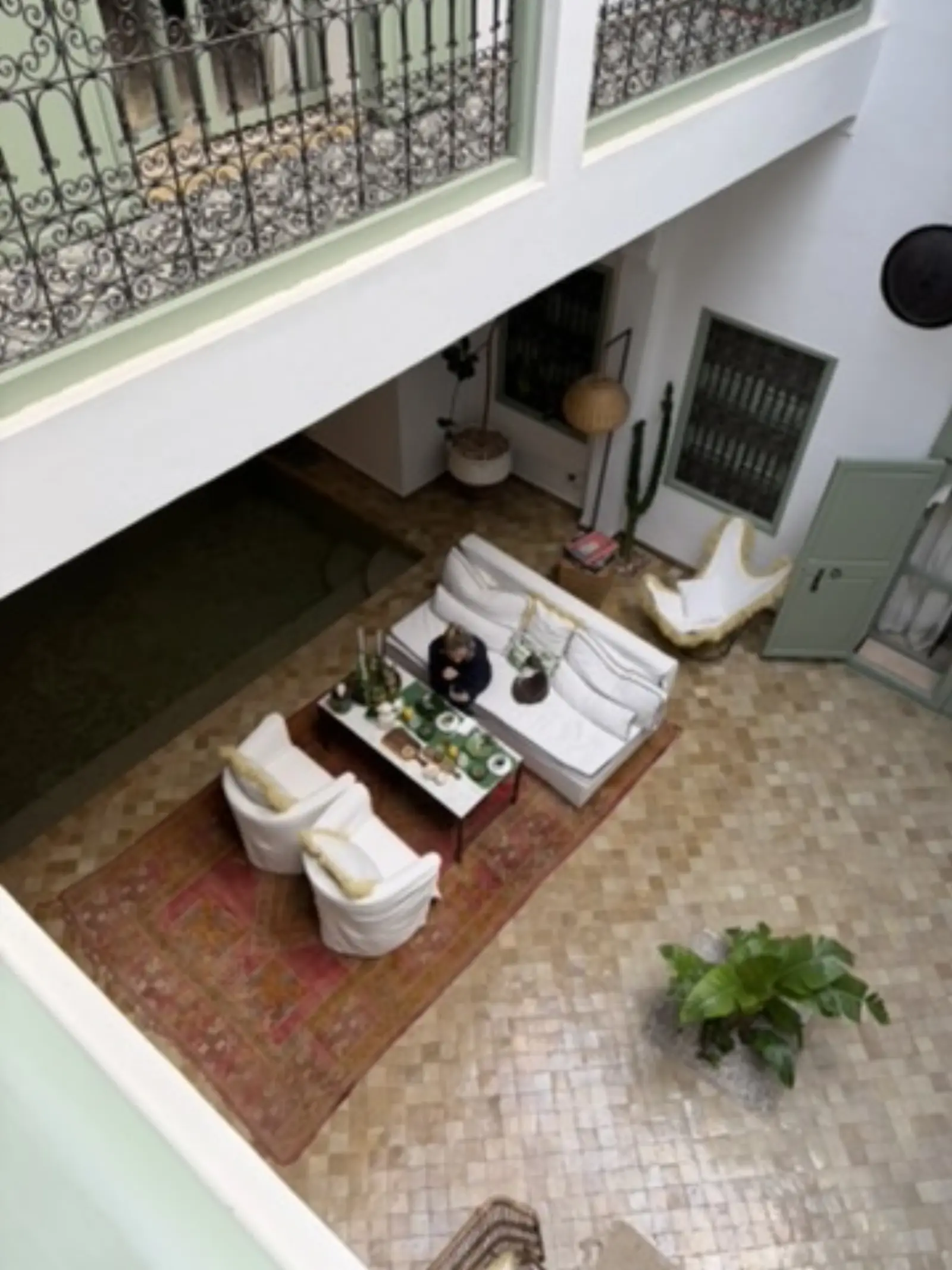
The practical effect of all this is that the patio becomes the room you actually use. You come back from four hours of souks, sit down in it, and nobody needs anything from you.
The room
The room was good: comfortable bed, decent bathroom, and warm, which matters more than people expect. Marrakech in January is a city of sunny afternoons and genuinely cold nights, and plenty of riads are built for summer heat rather than winter. This one handled it.
What a riad gives you over a hotel of the same price is thickness: heavy walls, small windows onto an internal courtyard rather than onto a street. We slept well every night, which in a medina is not a given.
Breakfast
Breakfast is where Riad Danka earns its reputation, and it is the part I would come back for.
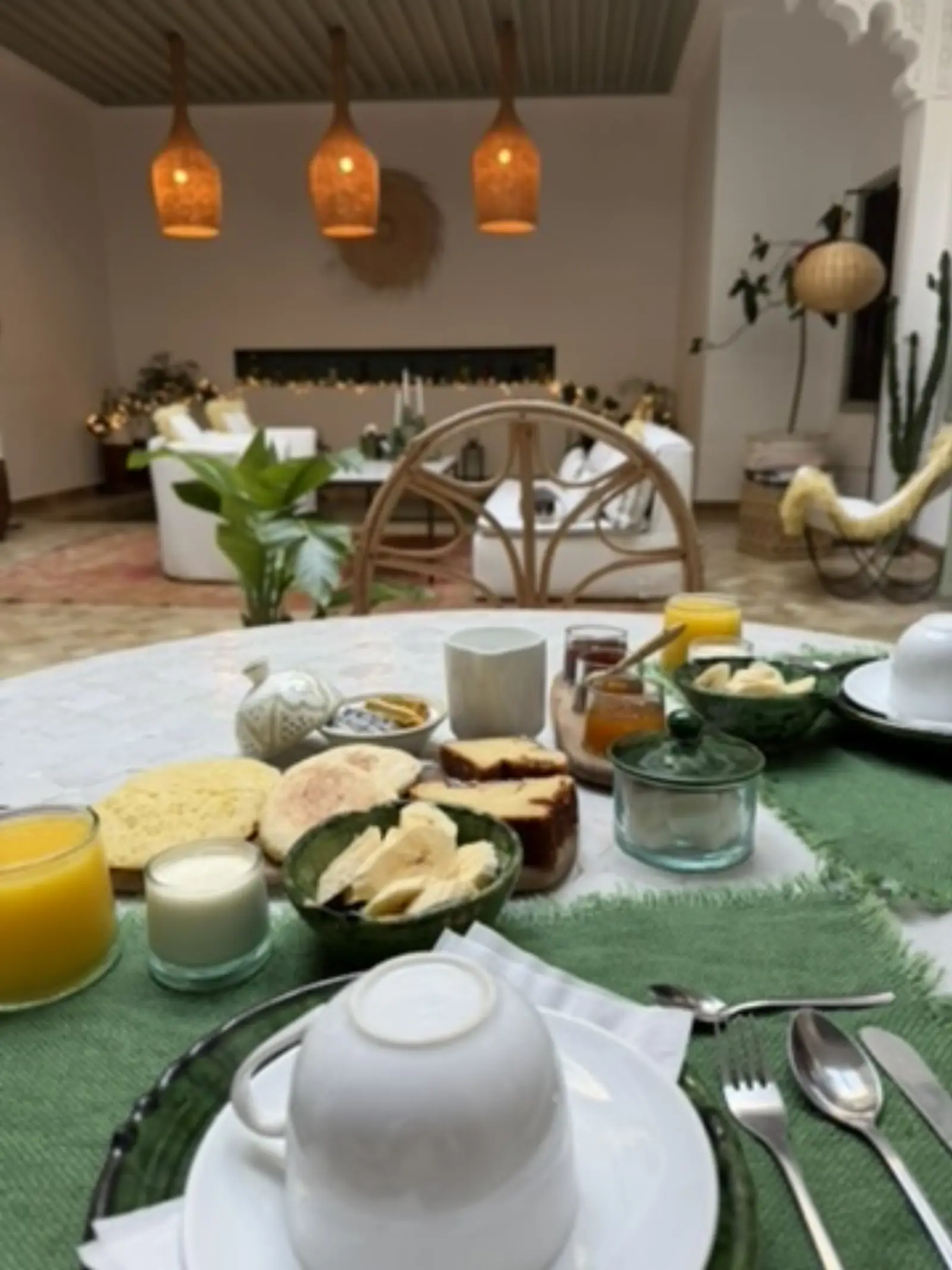
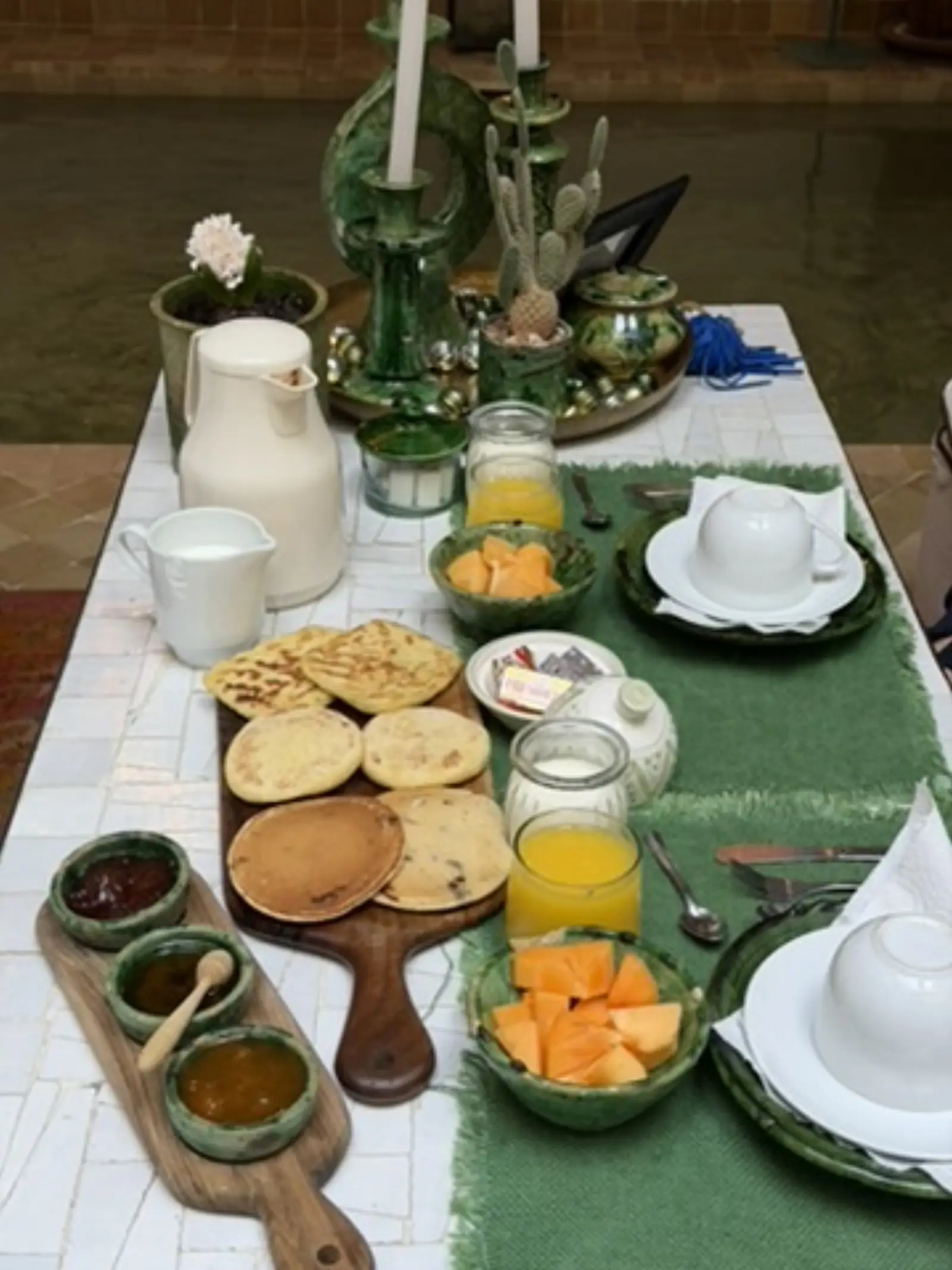
It arrives as a spread rather than a menu. Moroccan breads and pancakes, warm: msemen, the folded square ones, baghrir, the spongy ones full of little holes that soak up butter and honey, and soft round rolls. Then a row of small green ceramic bowls of jam and honey with little wooden spoons, a bowl of melon, yoghurt, a jug of milk, fresh orange juice, and coffee or mint tea.
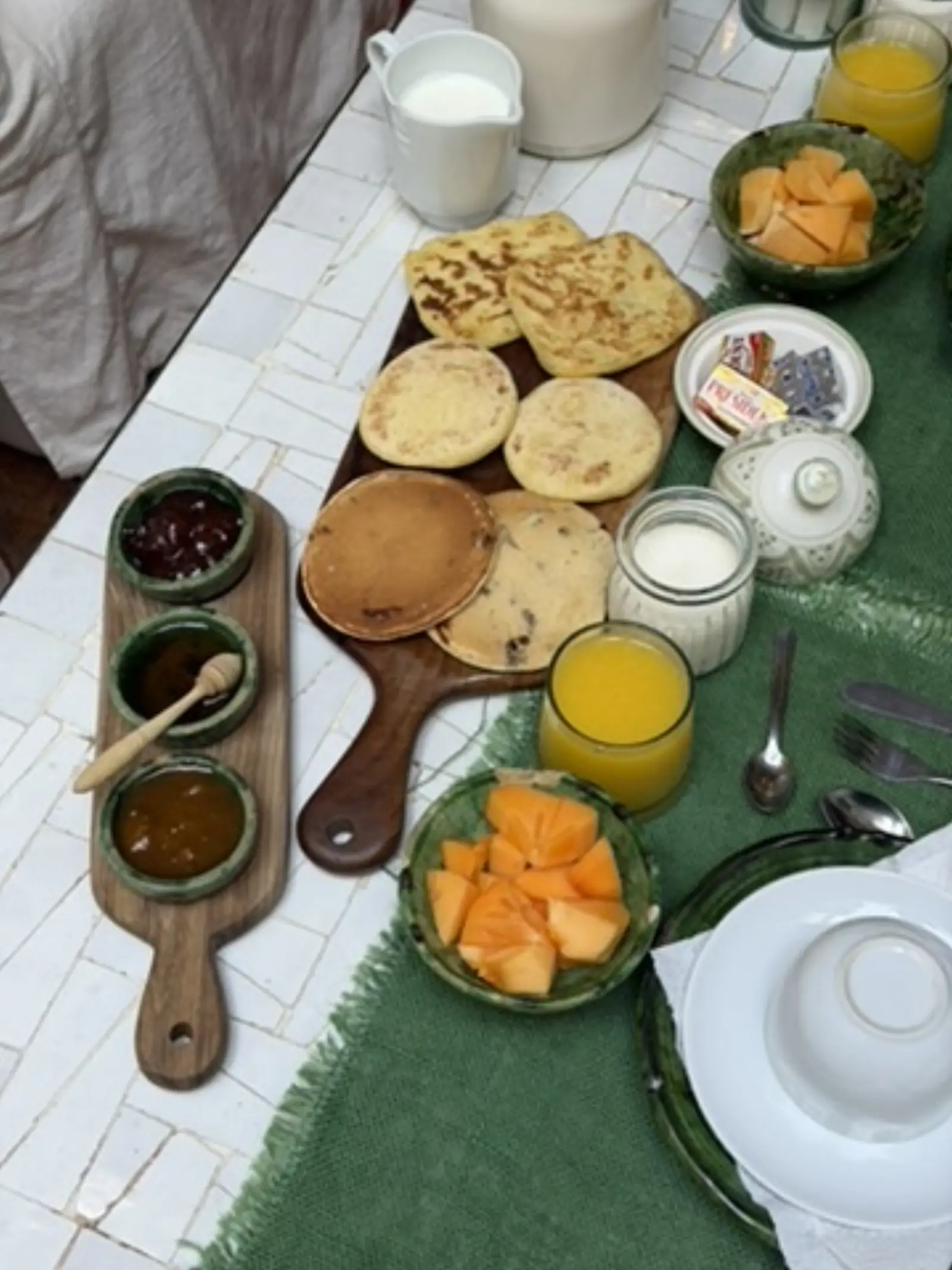
They lay it on a green fringed runner with green glass and candlesticks, either on the table beside the pool or on the low table in the salon, depending on the morning and the temperature. It takes an hour if you let it, and you should let it.
The service
The service was the standout. Small riads live or die on this, because there is no front desk machinery to hide behind: it is a handful of people who either pay attention or do not. Here they did, without hovering.
What is nearby
The flip side of being buried in the medina is that the old city is on your doorstep. Everything here is on foot:
- Rahba Kedima, the spice square, essentially at the end of the street
- The souks, which start right there and run north
- Jemaa el-Fna, the main square, about ten minutes on foot
- Ben Youssef Madrasa, a restored Islamic school with exceptional tile and cedar work
- Bahia Palace and the Saadian Tombs, both in the southern medina
- Jardin Majorelle and the Yves Saint Laurent Museum, in Gueliz, a short taxi ride out of the old city
If you want the longer explainer on what a riad is and how staying in one differs from a hotel, I wrote that up in the Riad Le Jardin Secret review.
Know before you go
- Cars cannot reach the door. Agree the pick-up when you book, and ask to be met after dark.
- Expect to be approached on the walk in, especially at night. The street is not closed, you do not need a guide, and a polite no is enough.
- January is colder than people expect after dark. Bring a jacket and check that your riad heats the rooms.
- Carry cash in dirhams. Small shops, the souks and most taxis prefer it.
- Agree the taxi fare before you get in, or ask for the meter.
FAQ
Where exactly is Riad Danka? 141 Derb Aarjane, by Rahba Kedima, in the Marrakech medina.
Is breakfast included? It was included in our stay and it is a proper Moroccan breakfast, not a continental one. Check your booking conditions.
Can I get a taxi to the riad? Not to the door. Taxis stop at the closest accessible point and you walk the last stretch, usually with someone from the riad meeting you.
Is it quiet? Yes. That is the main reason to stay here. The courtyard layout and the thick walls keep the medina outside.
Is it a good base for a first trip to Marrakech? The riad itself, yes. The walk to it is the catch: it is deep in the medina and the approach at night is tiring, with a lot of people offering unwanted help. If that would bother you on a first visit, look for somewhere closer to a street a taxi can actually reach.
Are the people stopping you on the way dangerous? In our experience no, just persistent. The usual lines are that the road ahead is closed or that they will walk you there, and then money is expected. A firm, friendly no and walking on works.
How many nights do I need in Marrakech? Three or four covers the medina, the palaces and the gardens without rushing. Add a night or two if you want the Atlas Mountains or the desert.
Riad Danka address: 141 Derb Aarjane, Rahba Kedima, Medina, Marrakech, Morocco