Walter Ponce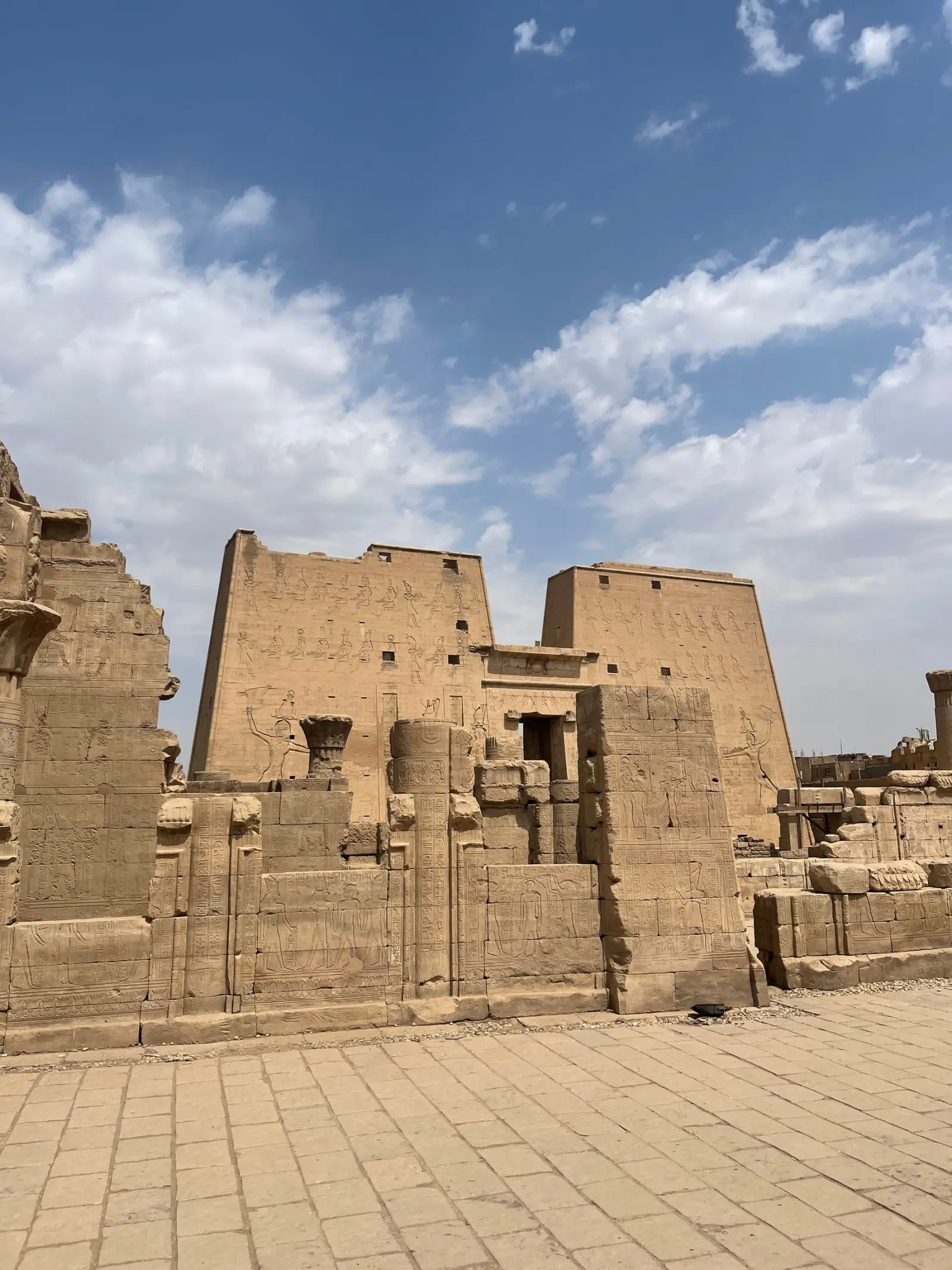
Egypt, a land where history breathes through every stone and whispers its secrets to those who listen. One such historical treasure that captures the essence of this ancient civilization is the Temple of Edfu, a remarkable monument that transports you back in time to the days of pharaohs, gods, and grandeur.
As part of our Dahabiya Nile Sailing, we visited the Temple of Edfu (or also called Temple of Horus). Personally, one of my favorite temples in Egypt and a MUST visit if you are around the area.
The Temple of Edfu: A Glimpse into Ancient Egypt
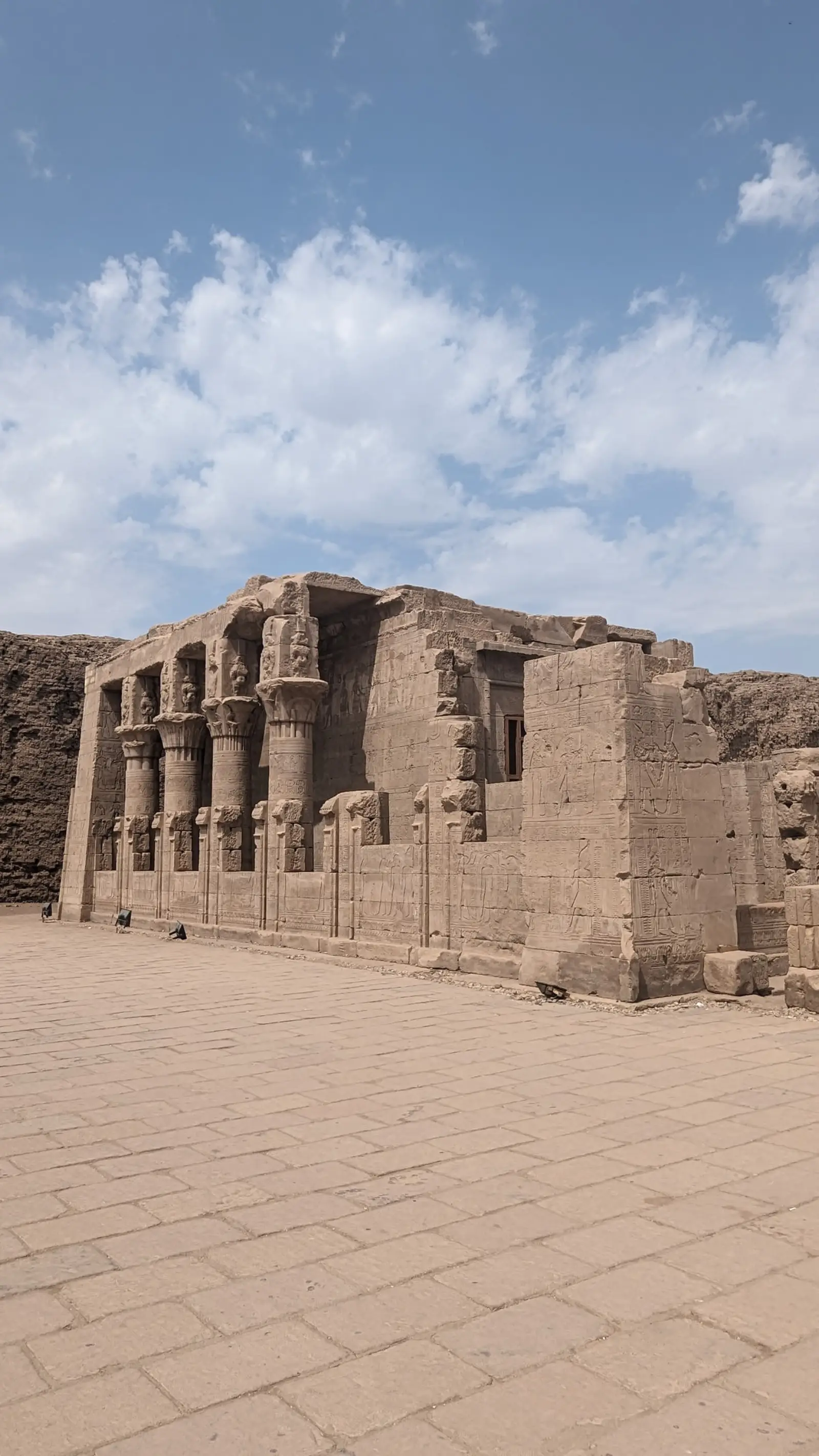
Located on the west bank of the Nile, Edfu Temple is one of the most well-preserved and magnificent structures from the Ptolemaic era. This temple, dedicated to Horus, the falcon-headed god of the sky, is an architectural marvel that beautifully illustrates the grandeur of ancient Egyptian culture and religious beliefs.
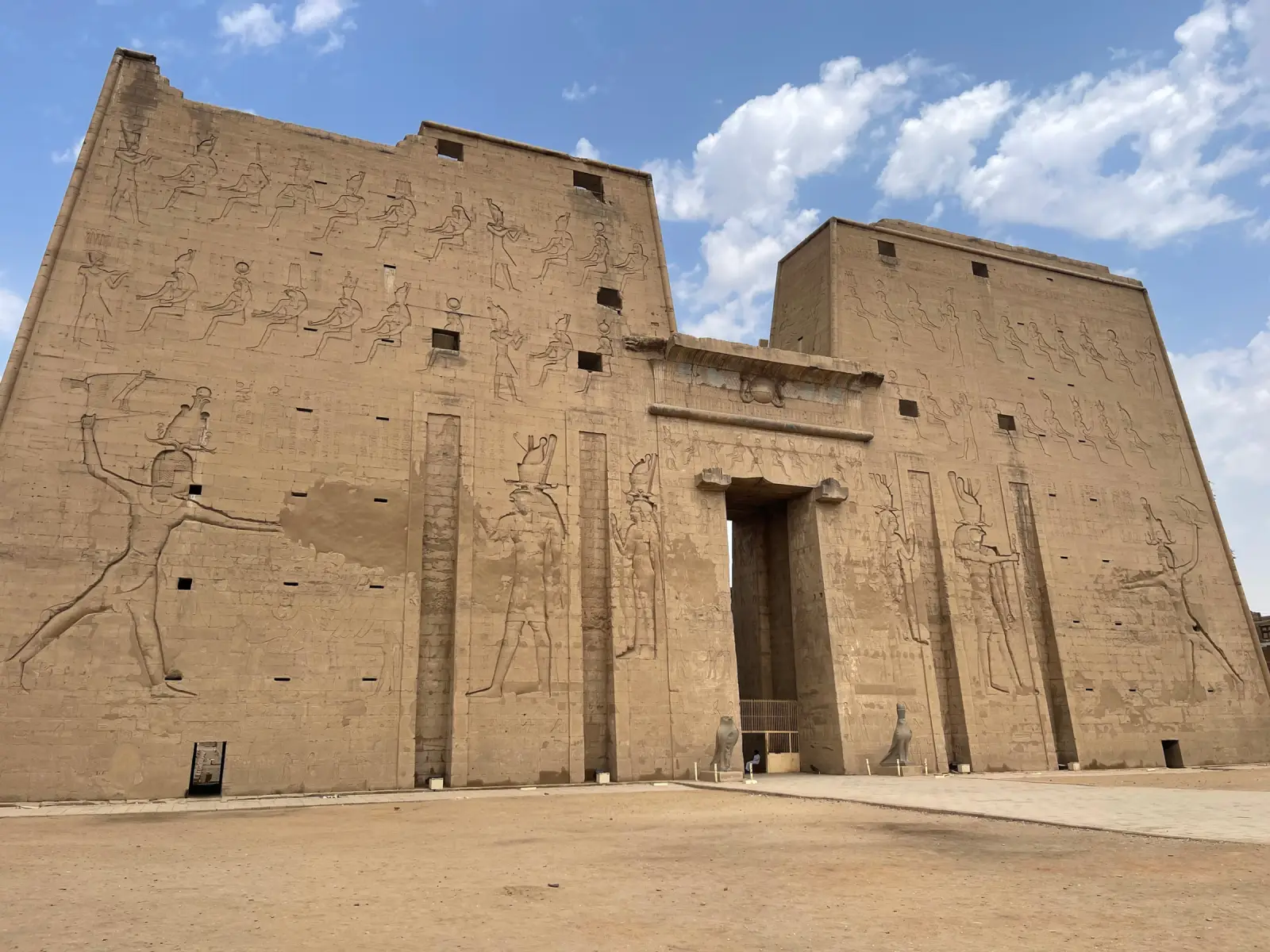
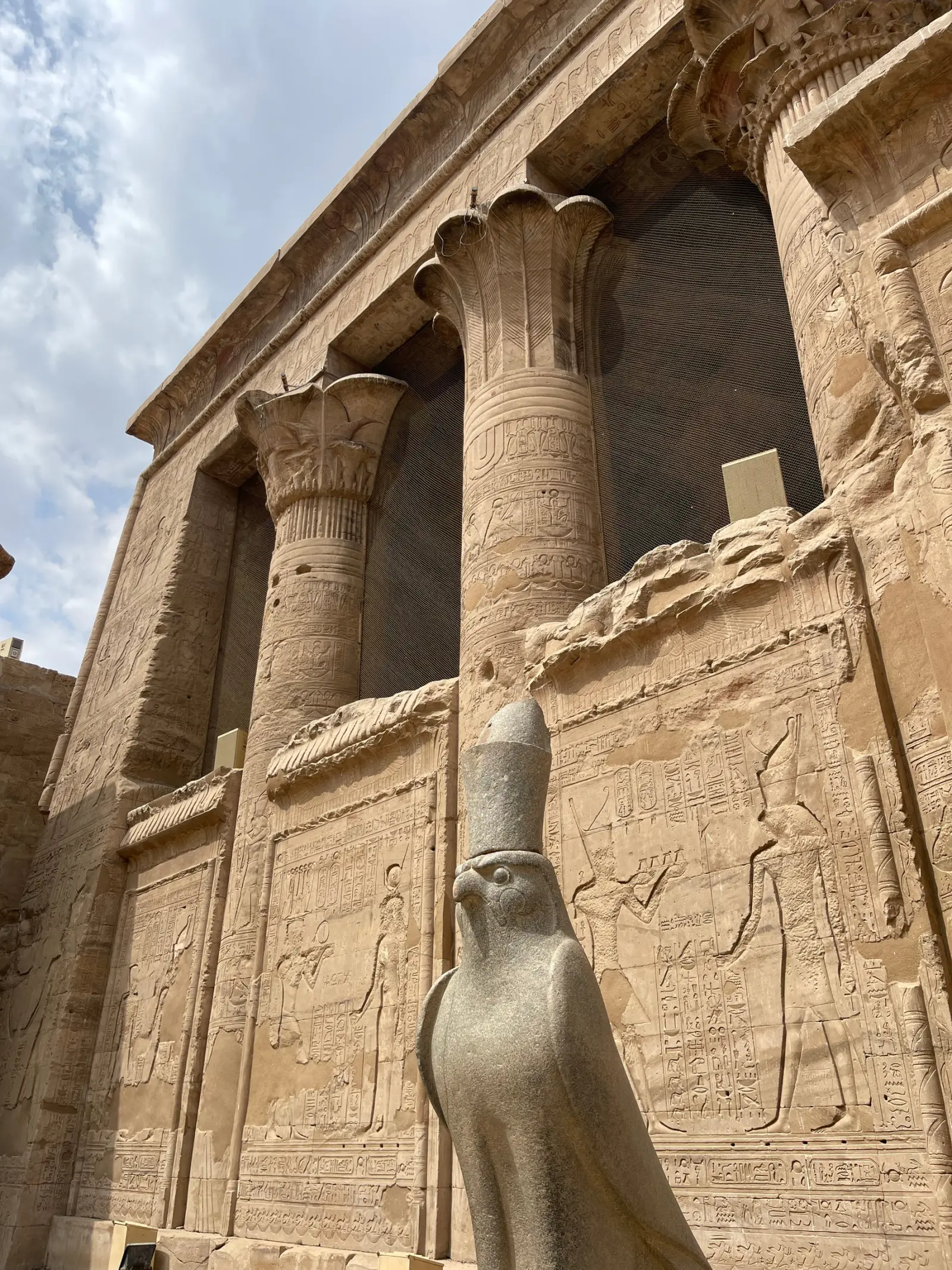
As you approach the temple, you’re greeted by towering pylons adorned with intricate hieroglyphs, vivid carvings, and awe-inspiring reliefs that tell stories of gods, battles, and rituals. The sheer scale and craftsmanship of these inscriptions are enough to leave you in awe. It’s like walking into a living history book, where every wall whispers tales of the past.
The Grand Courtyard: An Offering to the Gods
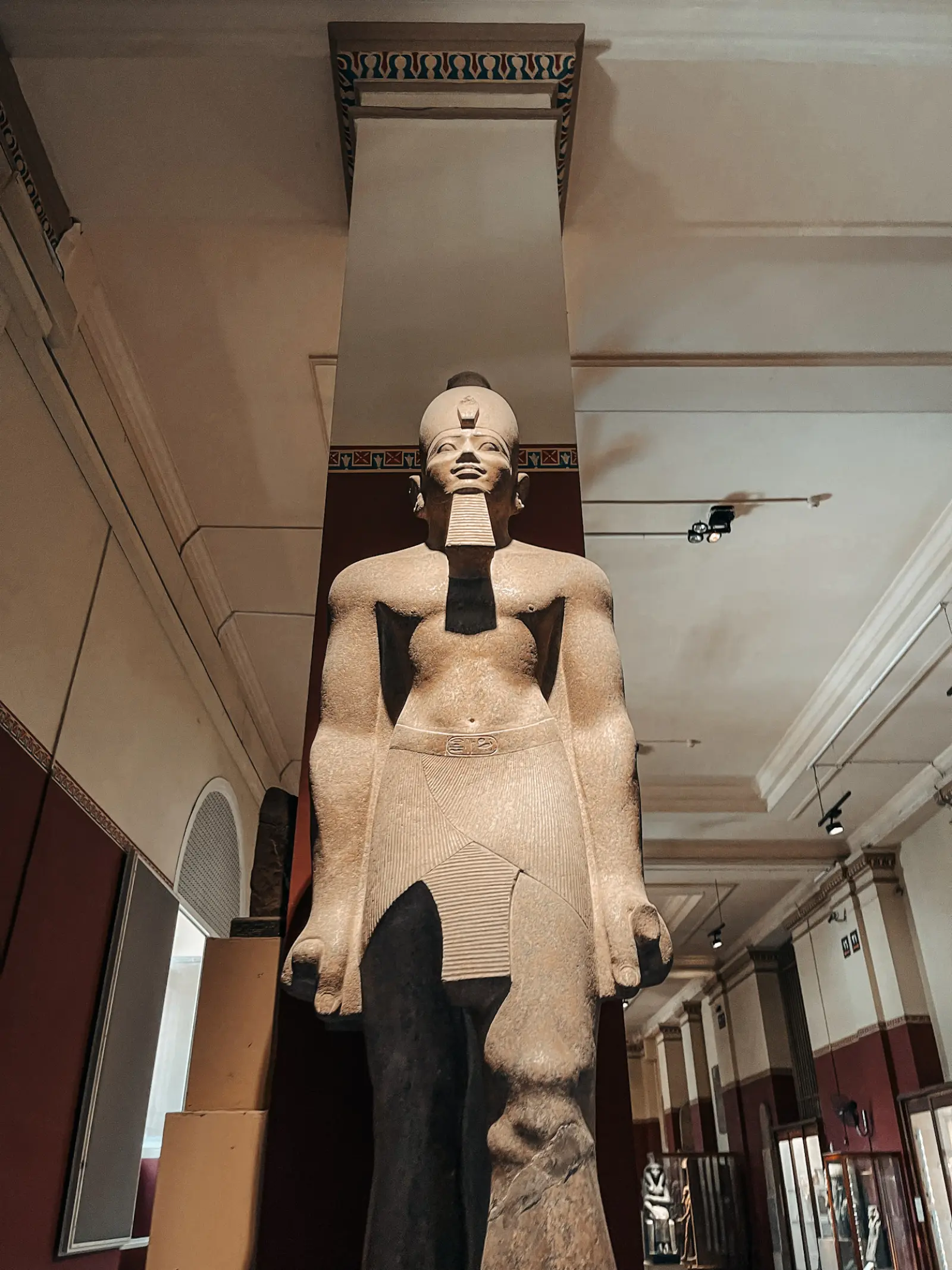
Once past the pylons, you enter the grand courtyard, where an imposing black granite statue of Horus stands guard. This area served as a space for ceremonial processions and rituals, and it’s easy to imagine the splendor of these ancient events with the colossal statue watching over them.
The Hypostyle Hall: A Forest of Columns
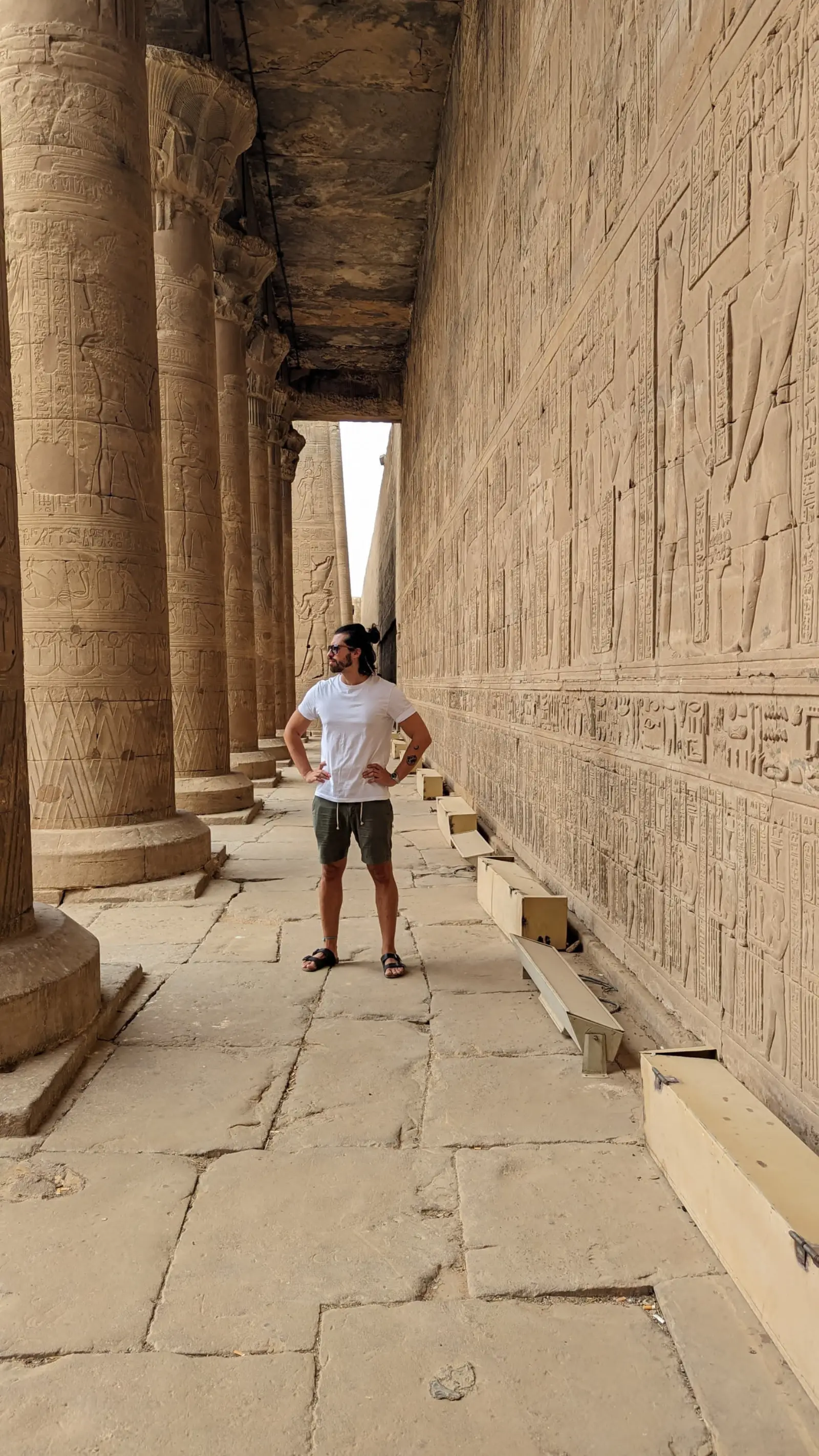
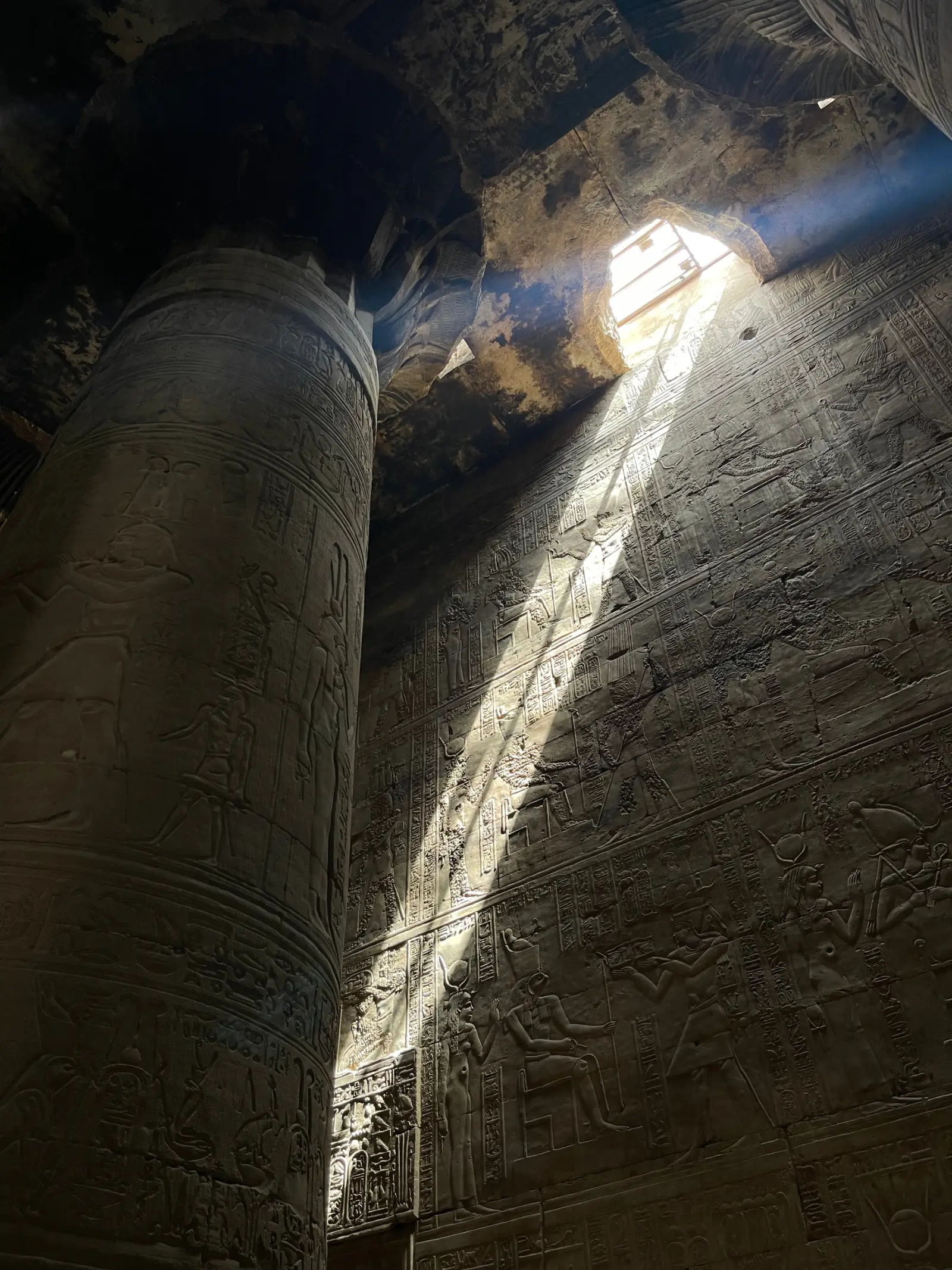
Moving deeper into the temple, you’ll encounter the hypostyle hall, a majestic chamber with towering columns, intricately decorated with depictions of Horus, pharaohs, and various deities. The play of light and shadow, the coolness of the stone, and the sense of reverence within these walls are truly enchanting.
The Inner Sanctum: A Glimpse into Ancient Beliefs
Finally, you reach the inner sanctum, where the central shrine housed the divine idol of Horus. This sacred space was reserved for the most vital religious ceremonies, and the energy here is palpable.
A Temple Preserved by the Sands of Time
One of the remarkable aspects of the Temple of Edfu’s preservation is the sand that filled its chambers after the decline of pagan worship. This natural protection safeguarded the temple from erosion and vandalism, making it a time capsule waiting to be explored.
Tips for Your Visit to Edfu Temple
Guide: Consider hiring a local guide or audio guide to truly appreciate the historical significance and stories behind the temple’s walls. We had a guide as part of the Dahabiya Nile Sailing and we found it very important in order to get insightful informations.
Sun Protection: Egypt’s sun can be intense, so wear sunscreen, a hat, and sunglasses.
Comfortable Shoes: You’ll be doing a fair amount of walking, so wear comfortable footwear.
**Water: **Very important! Don’t forget to bring your bottle of water as you will definitely need it.
Conclusion: A Journey through Time
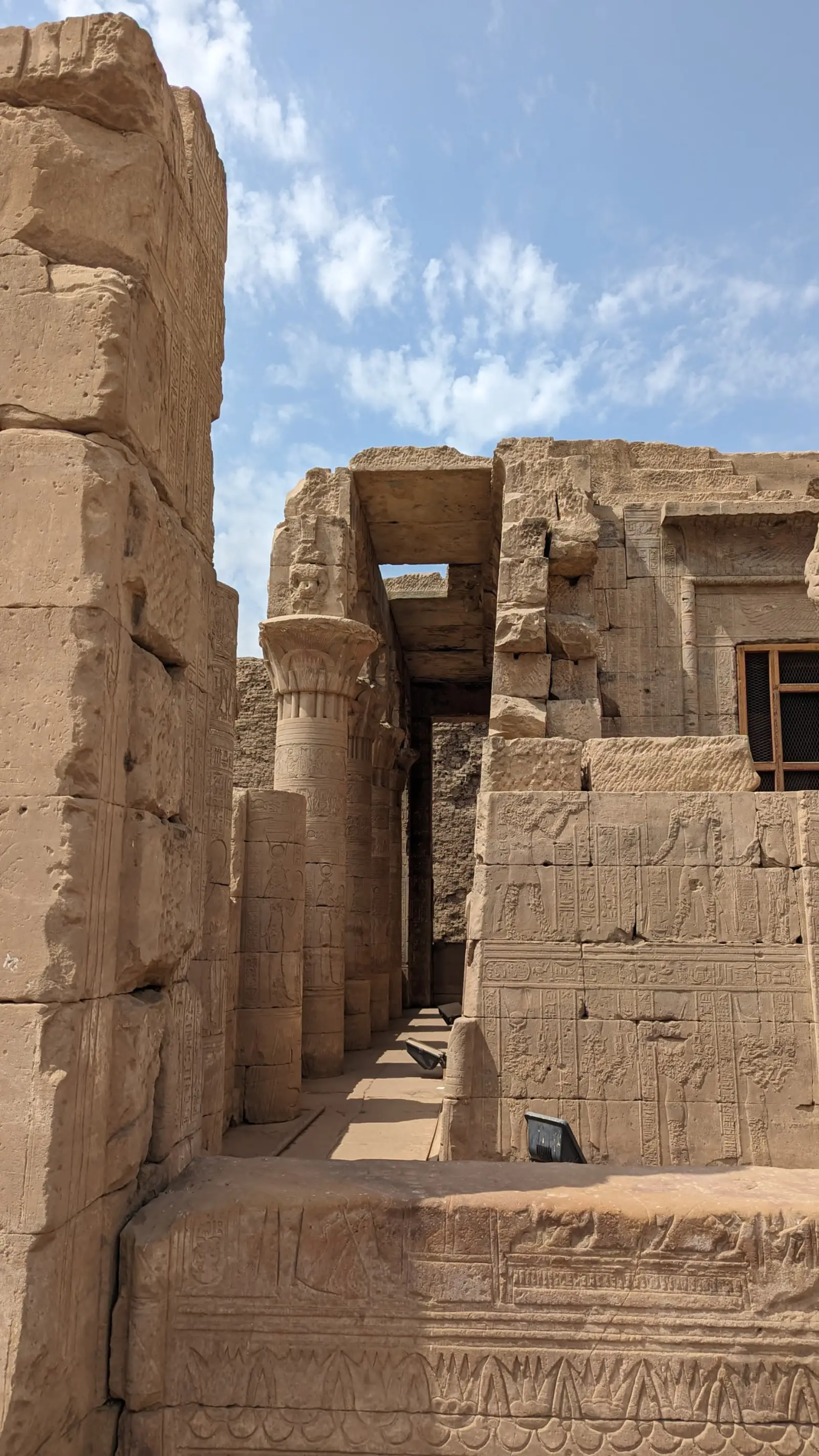
The Temple of Edfu is more than just a historical site; it’s a portal into the past. It’s a place where the stories of gods and pharaohs come to life, where the artistry of a civilization is etched in stone, and where the sands of time have been kind, preserving a piece of history for us to explore and cherish.
As you stand within these hallowed halls, you can’t help but feel the weight of centuries of history and marvel at the enduring legacy of ancient Egypt. It’s a journey that will leave you forever enchanted by the mysteries and grandeur of this remarkable civilization.
A Short History of Edfu Temple
Construction of the temple began in 237 BC under Ptolemy III and was completed around 57 BC, during the reign of the Ptolemaic dynasty, the Greek-Macedonian rulers who governed Egypt after Alexander the Great. Even though the builders were not native Egyptians, they followed traditional Egyptian temple design very closely, which is why Edfu is often used as a textbook example of a classic Egyptian temple layout.
The walls carry long inscriptions that are an important source for historians. Among them:
- The myth of Horus and Seth, telling the story of the battle between Horus and his uncle Seth for the throne of Egypt.
- The Festival of the Beautiful Meeting, an annual celebration when the statue of the goddess Hathor travelled by boat from Dendera to visit Horus at Edfu.
- Building texts describing how the temple was constructed and how it should be used.
In the 19th century, the French archaeologist Auguste Mariette led the work that cleared the temple of the sand and later houses that had covered it.
Where Edfu Is and How to Get There
Edfu is a town on the Nile between Luxor and Aswan, roughly in the middle of the classic Nile cruise route.
- By Nile cruise or dahabiya: The most common way. Boats stop at Edfu and passengers reach the temple by horse carriage or minibus.
- By road from Luxor or Aswan: Day trips by car are possible. Edfu is often combined with the temple of Kom Ombo on the same route.
- By train: Edfu has a station on the Cairo–Aswan line, but most visitors prefer organised transport.
Best Time to Visit
- October to April: The most comfortable months, with warm days and cooler mornings.
- May to September: Very hot in Upper Egypt. Visit as early as possible in the morning.
Early morning is the best time of day in any season, both for cooler temperatures and fewer crowds. Opening times and ticket prices can change, so check current details before you go.
Other Temples on the Nile Route
If you enjoyed Edfu, these temples along the same stretch of the Nile are worth adding:
- Kom Ombo: A rare double temple dedicated to Sobek, the crocodile god, and Haroeris (a form of Horus).
- Philae: The temple of Isis near Aswan, moved to a new island when the Aswan dams were built.
- Karnak and Luxor temples: The great temple complexes of Luxor.
- Dendera: The temple of Hathor north of Luxor, connected to Edfu by the yearly festival.
FAQ
How old is the Temple of Edfu? It was built between 237 and 57 BC, during the Ptolemaic period.
Why is it so well preserved? It was covered by sand and later buildings for centuries, which protected it from damage until it was cleared in the 19th century.
How long do you need at Edfu? Around one to two hours is enough for most visitors, more if you want to read the reliefs in detail.
Is Edfu included on Nile cruises? Yes. Most cruises and dahabiyas between Luxor and Aswan stop there.
What is the best time of day to visit? Early morning, to avoid heat and crowds.