Walter Ponce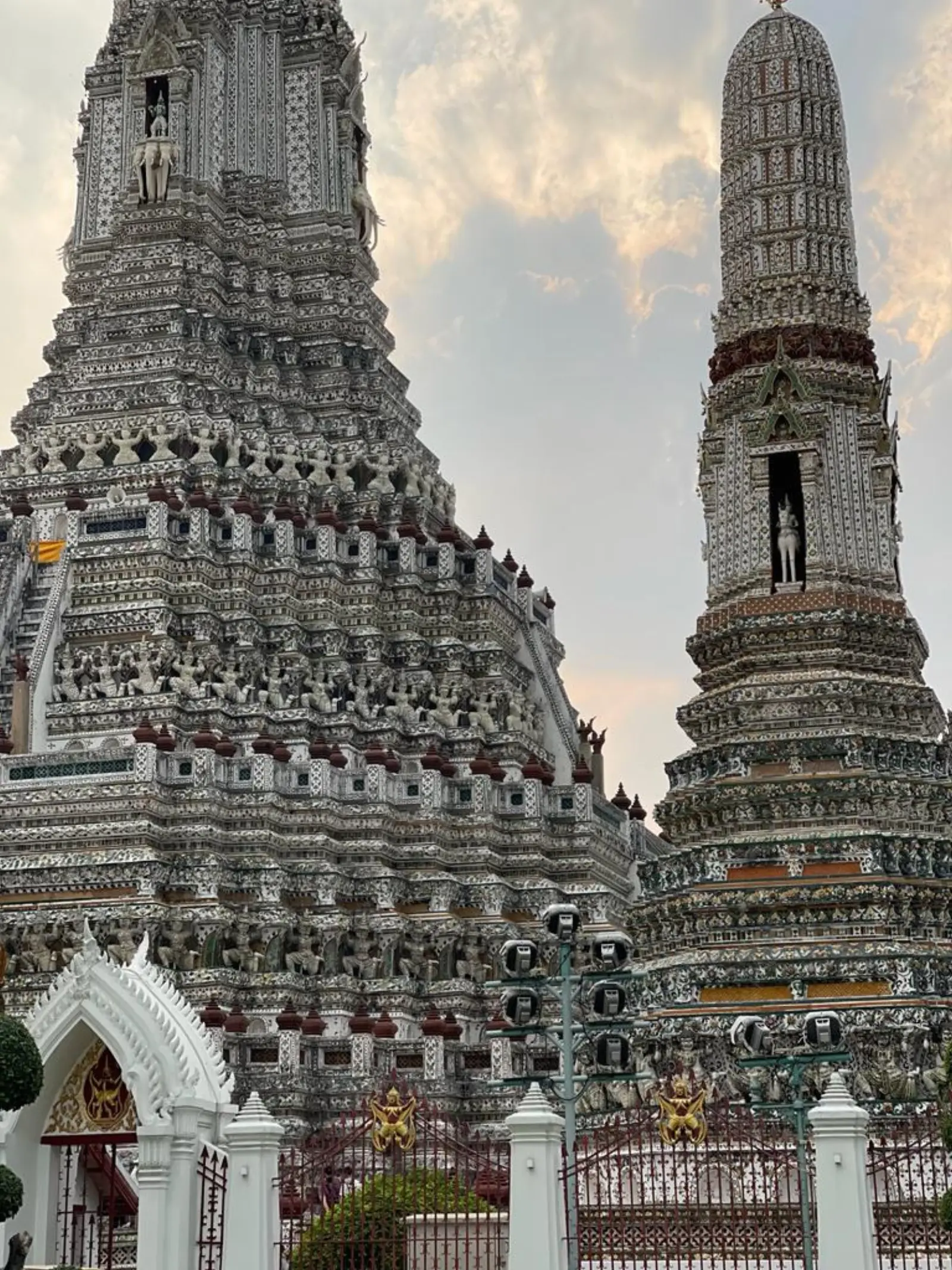
When you are going to travel for the first time to the capital of Thailand and do a search type “ what to see in Bangkok “, you can immediately see that the Wat Arun or Temple of Dawn, appears as one of the essential visits in most of blogs, forums or guides. Observing the golden silhouette of Wat Arun at dusk from the Chao Phraya River or climbing to the top of its pagoda are two of the best experiences you can have in Bangkok.
Brief history of Wat Arun temple
At the current site of Wat Arun, there was an ancient Buddhist temple called Wat Makok in the days of the Kingdom of Ayutthaya, which is known to have existed before 1656. At that time, that bank of the Chao Phraya River belonged to the independent city of Thonburi, which was not part of Bangkok until 1972. After the fall and destruction of Ayutthaya (1767) at the hands of the Burmese, General Taksin - later King Taksin - decided to move the capital to Thonburi. It is said that he first saw Wat Makok at sunrise and that, since then, the temple began to be referred to as Wat Chaeng (Temple of Dawn). It was the royal temple and housed the famous Emerald Buddha for a short time, but Taksin’s successor, King Rama I, moved the capital to the other side of the river, where it remains today (see post from the Grand Royal Palace ).
Visit Wat Arun
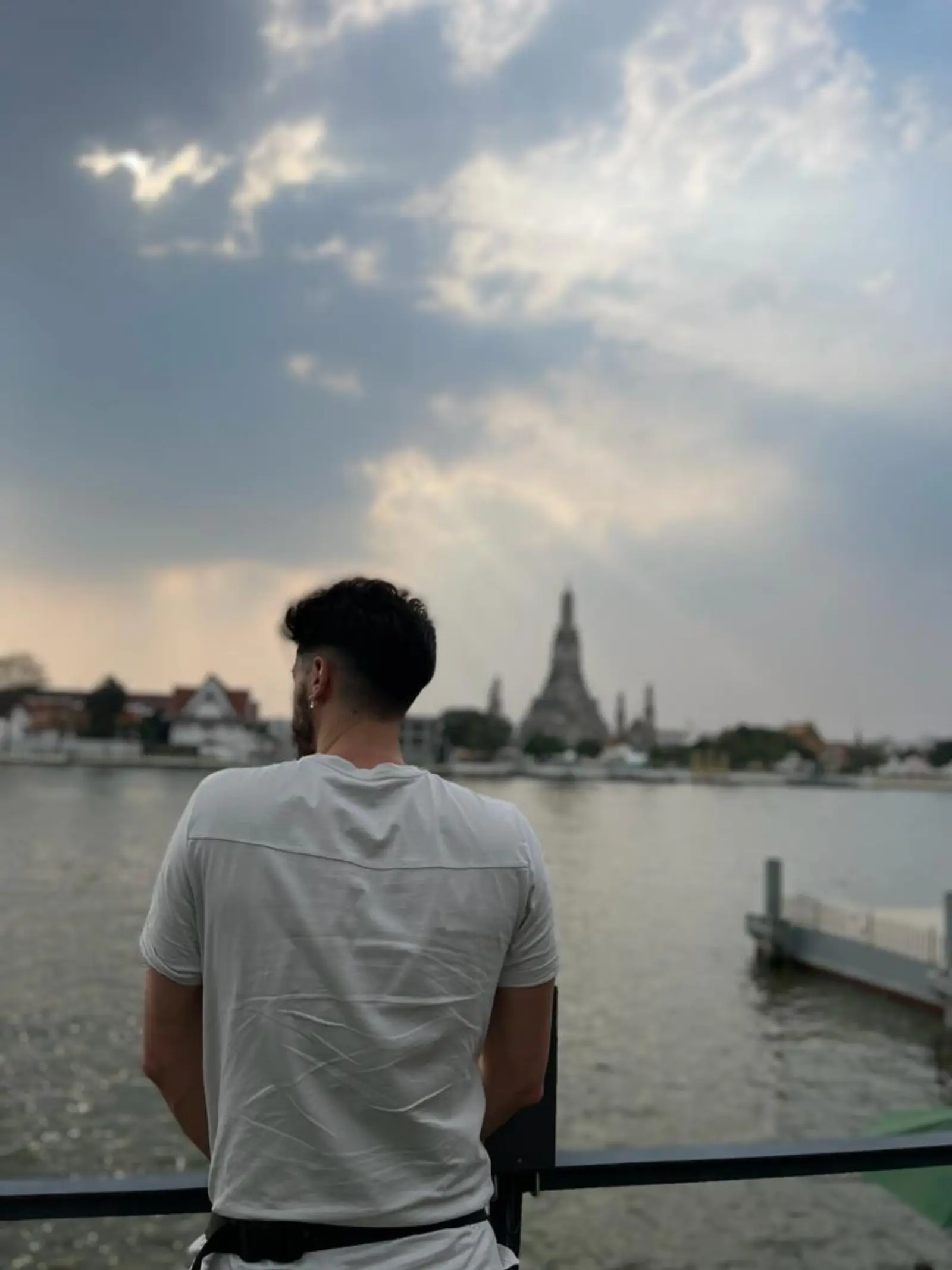
**Wat Arun is one of the essential visits in **Bangkok. You will see its silhouette many times during your stay in Bangkok, as it is well visible next to the Chao Phraya in an area very close to the Grand Palace and Wat Pho, also a must-see. There are several ways to enjoy Wat Arun. One of them is to sit on the other side of the river and watch it at dusk. If you want enjoy the view and eat or drink something, I suggest to visit Rongros Bangkok.
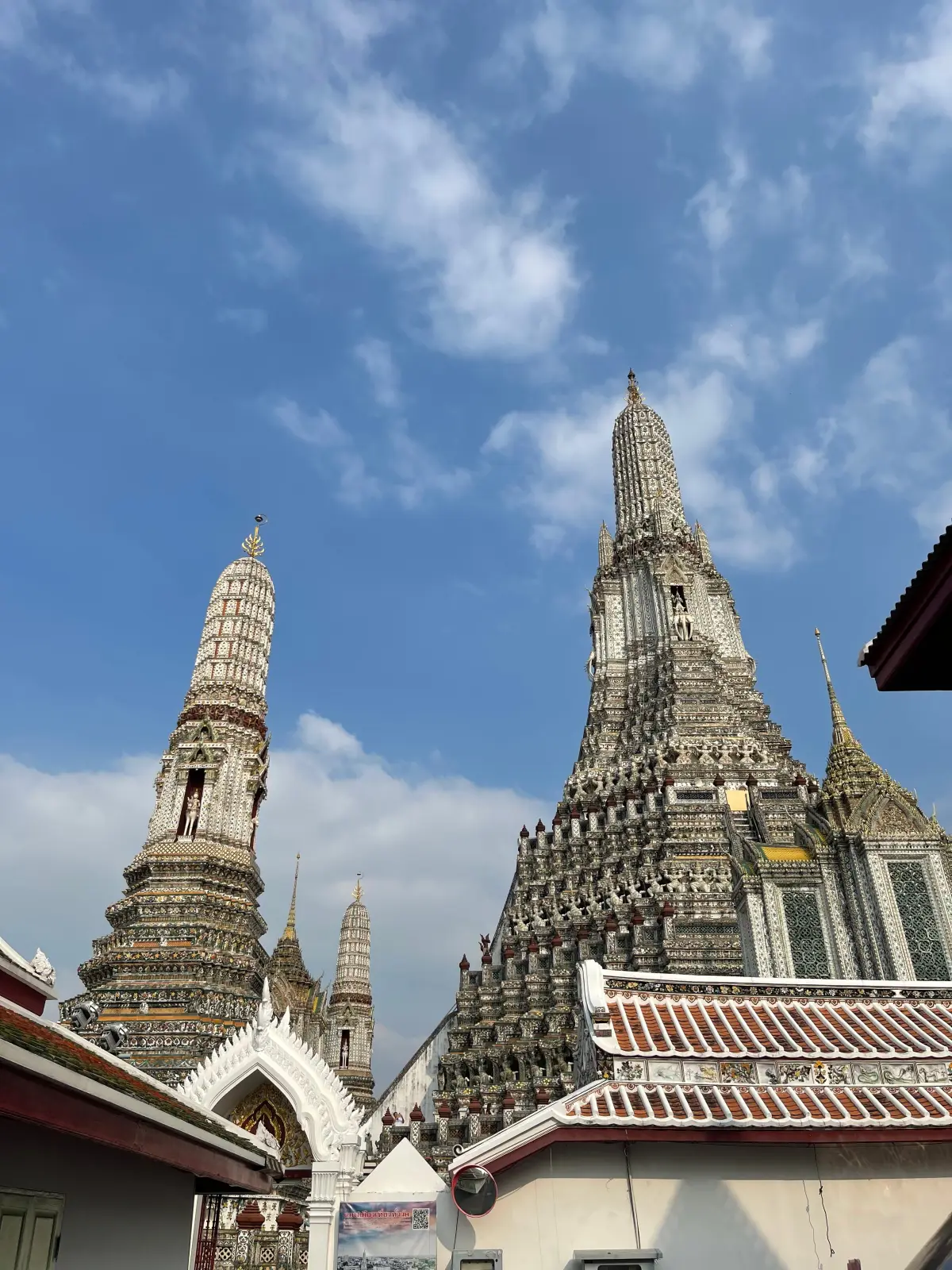
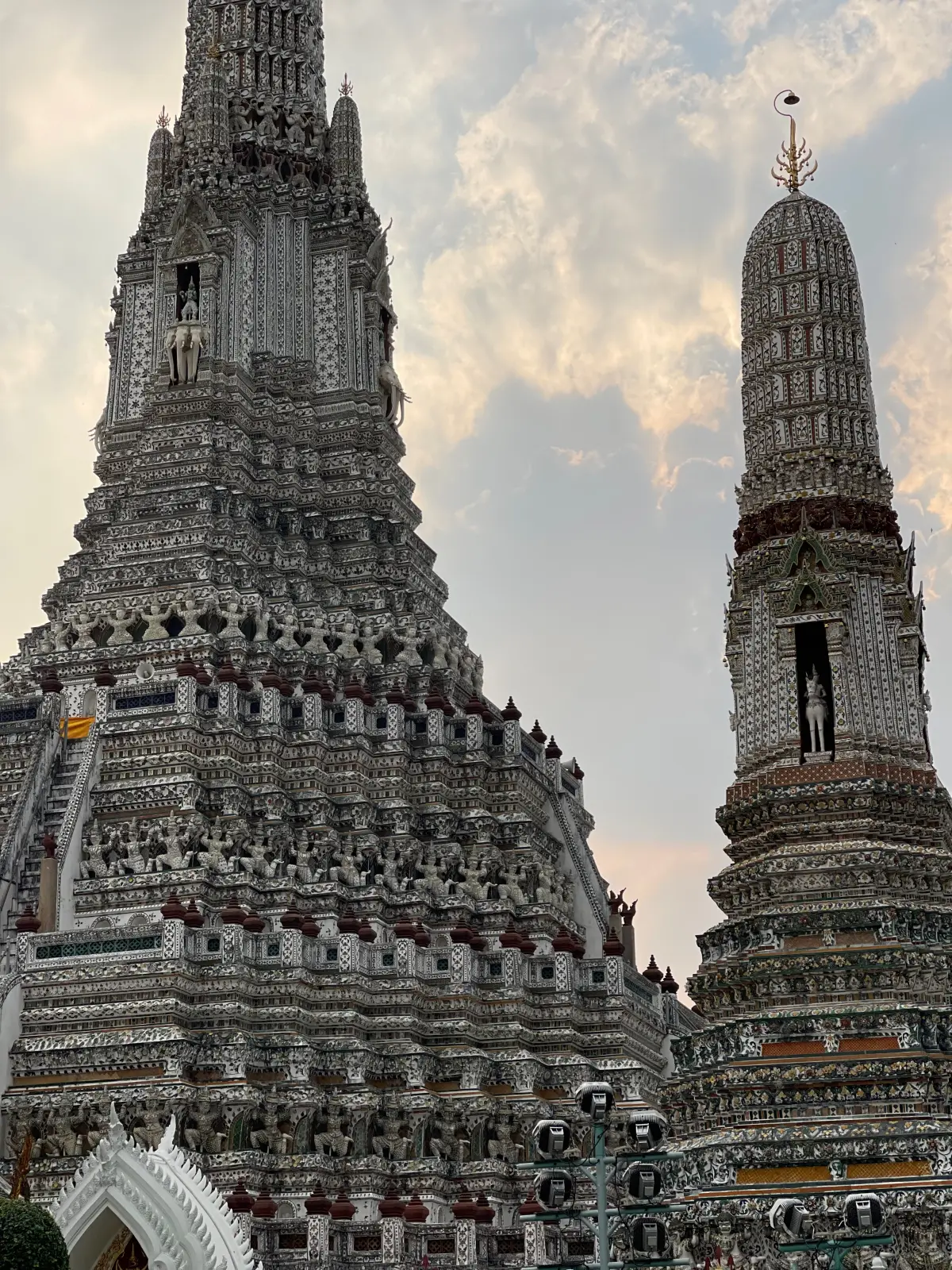
Another way to enjoy Wat Arun temple is from one of the many boats that sail the Chao Phraya. The most profitable option is the local boat, although the tourist boat is not expensive and we will have explanations in English inside. We did not experiment with other more expensive options, but there is a good variety of boats that can offer you dinner on board, even romantic evenings. Finally, it is necessary to cross the river to get to Wat Arun and to be able to admire closely the shells and pieces of porcelain that were used to decorate it and that formerly had served as ballast for merchant ships.
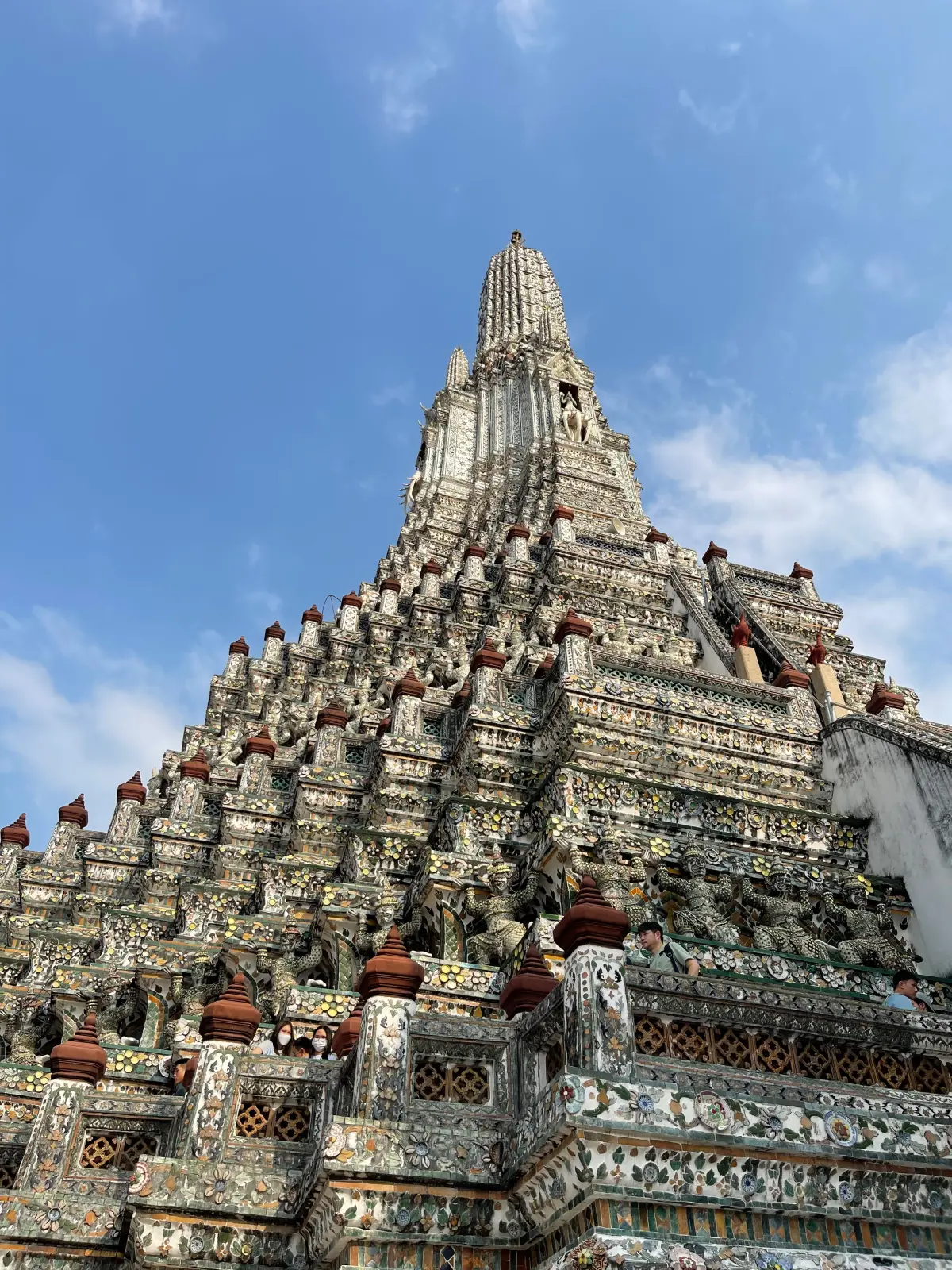
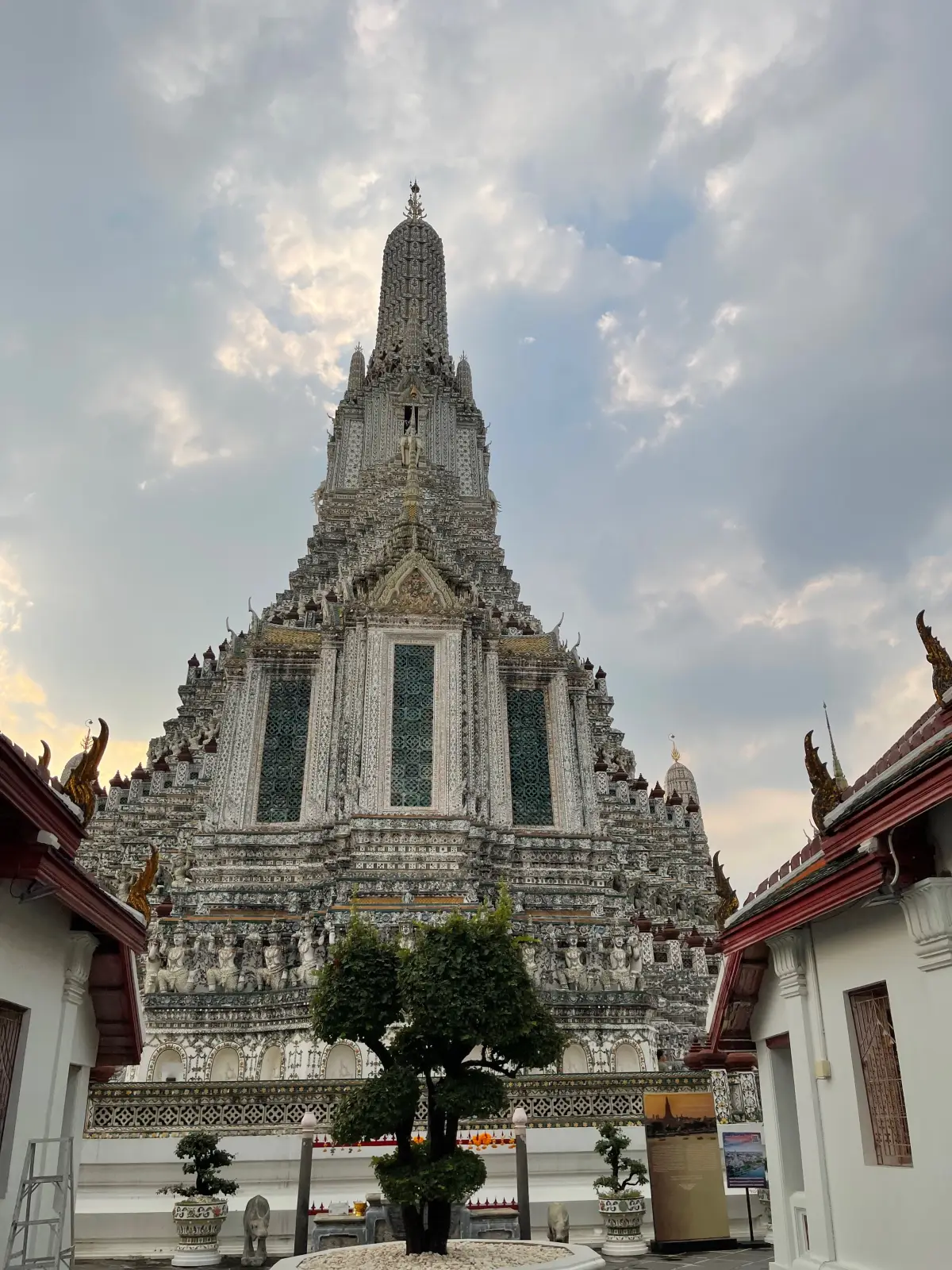
And, of course, you have to make the effort to climb to the top of its prang (tower) by some very steep stairs. This large central tower, in the Khmer (Khmer) style, represents Mount Meru, the center of the Universe in Hindu symbolism, while the small side towers house statues of the wind god Phra Phai. Climbing to the top we will have the opportunity to contemplate the rich details that crowd it and, as a reward, obtain magnificent views over the Chao Phraya and the immense Bangkok.
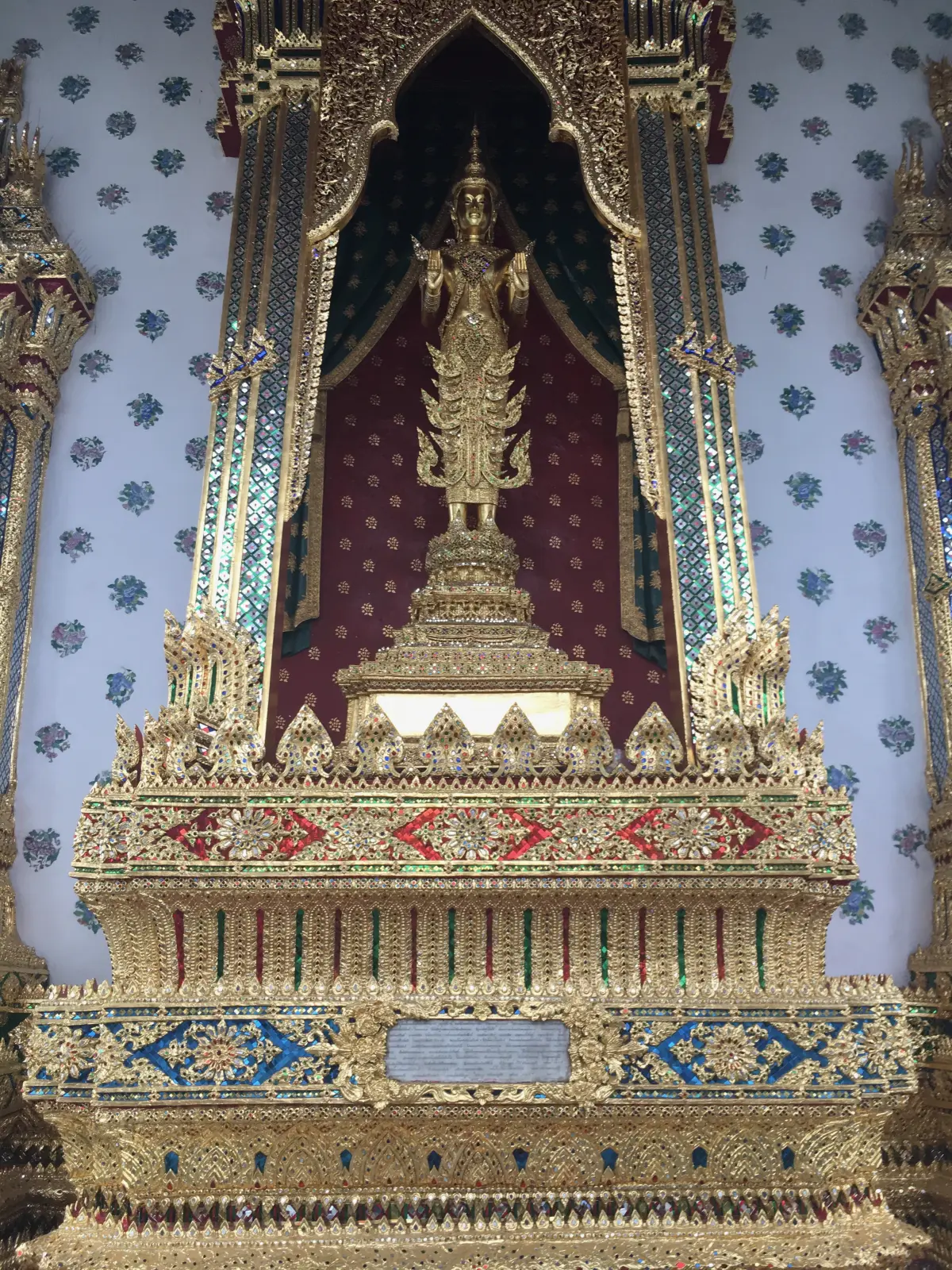
The temple complex has other sacred buildings and points of interest in the surroundings of the prang, so it is worth taking a look before leaving the enclosure.
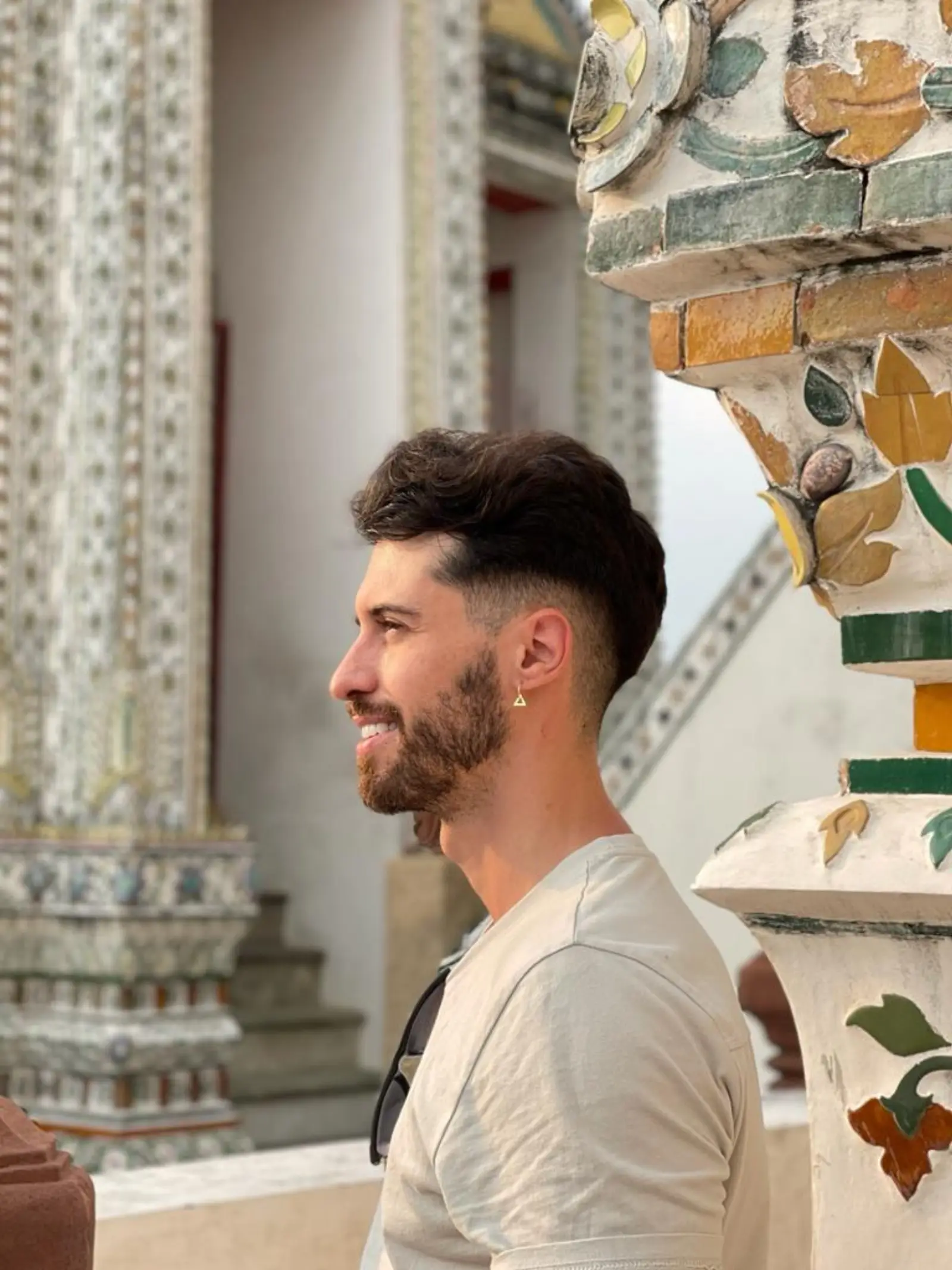
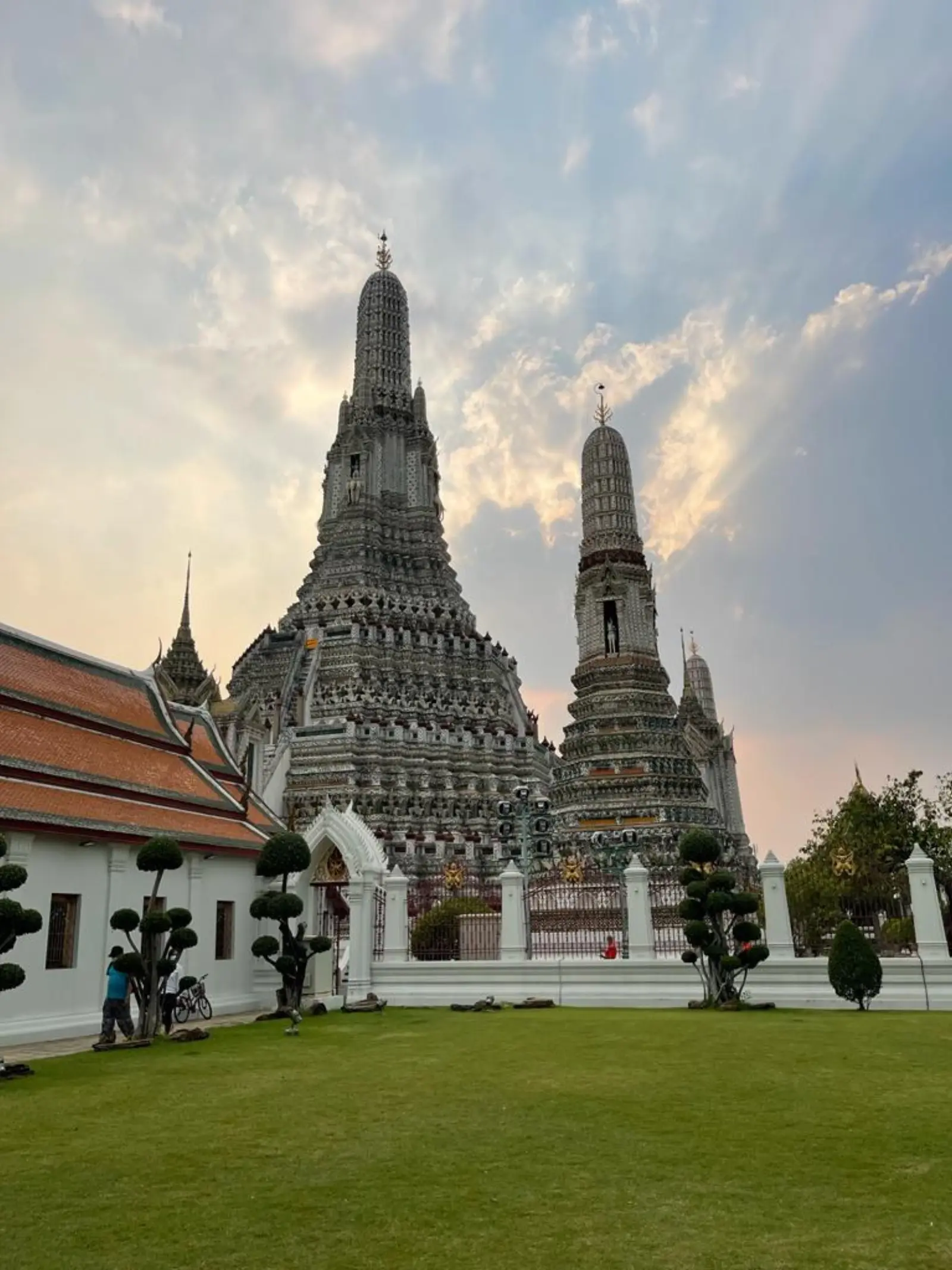
The temple is becoming more and more popular and the entrance fees are only increasing. However, entering Wat Arun costs only 100 baht per person (about € 3).
You can visit this temple together with the Wat Pho and the Grand Palace on the same day, the three are very close, also at the end of the day a highly recommended option is to go to dinner in Chinatown and from there have a drink in Khao San Road where the night life is quite visible.
**Address Wat Arun Temple: **158 Thanon Wang Doem, Wat Arun, Bangkok Yai, Bangkok 10600, Thailand
**Website Wat Arun Temple: **https://www.facebook.com/watarunofficial/?mibextid=ZbWKwL
How to Get to Wat Arun
Wat Arun is on the west bank of the Chao Phraya River, opposite Wat Pho and the Grand Palace.
- Cross-river ferry: The simplest way is to take the small cross-river ferry from Tha Tien pier, near Wat Pho. The crossing takes just a few minutes.
- Chao Phraya Express Boat: The river boats stop at piers along the river and connect with the BTS Skytrain at Saphan Taksin (Sathorn pier).
- MRT: The Sanam Chai MRT station is on the Wat Pho side of the river, a short walk from Tha Tien pier.
- Taxi or ride-hailing app: Possible, but traffic can be heavy, and the boat is often faster.
Dress Code and Etiquette
Wat Arun is an active Buddhist temple, so respectful clothing is required:
- Cover your shoulders and knees. Avoid sleeveless tops, short shorts and short skirts.
- Take off your shoes before entering buildings with Buddha images.
- Don’t point your feet towards Buddha images or monks.
- Keep your voice down and be respectful of people praying.
If you are not dressed appropriately, you may be asked to cover up before entering. Check the current rules and entrance fee before you go, as they can change.
Best Time to Visit
- Early morning is the quietest and coolest time to climb the prang.
- Late afternoon and sunset are perfect for viewing the temple from across the river, as described above.
- At night, the temple is lit up and looks spectacular from the riverside and from river cruises.
- November to February is the coolest and driest period in Bangkok and is generally the most pleasant time to visit.
Tips for Your Visit
- Wear shoes with good grip for the steep stairs of the prang.
- Bring water and sun protection, as there is little shade.
- Plan one to two hours for the visit.
- Combine it with Wat Pho and the Grand Palace on the same day, as they are very close.
More photos
FAQ
Why is Wat Arun called the Temple of Dawn? The name comes from Aruna, the Hindu god of dawn. According to tradition, King Taksin arrived at the temple at sunrise.
How do I get to Wat Arun from Wat Pho? Walk to Tha Tien pier and take the short cross-river ferry.
Is there a dress code at Wat Arun? Yes. Shoulders and knees should be covered.
Can I climb the central prang? Visitors can climb part of the way up the steep stairs. Access may be limited during restoration work, so check before you go.
When is the best time to see Wat Arun? Early morning for a quiet visit, and sunset or evening to see it from across the river.