Walter Ponce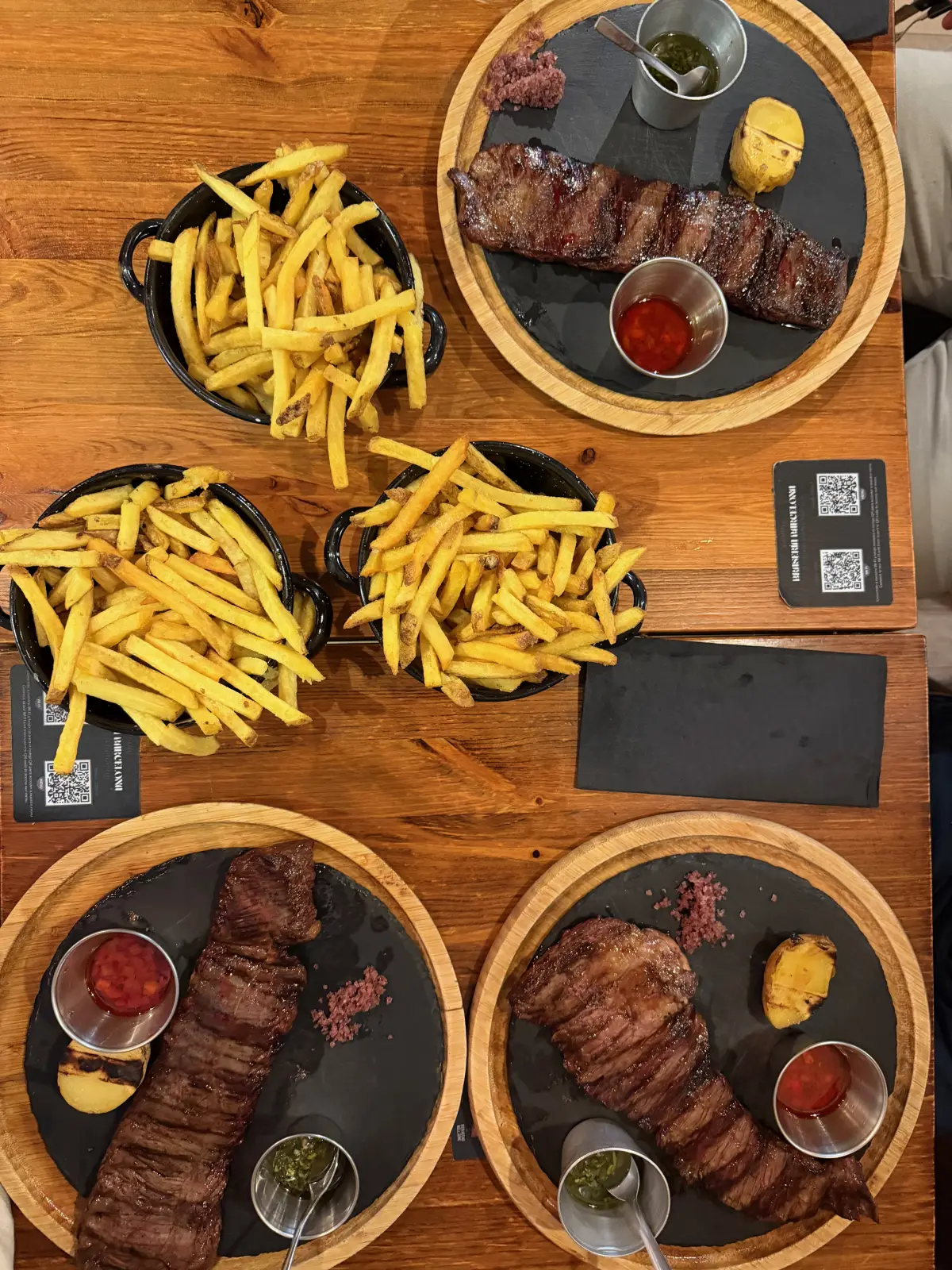
Barcelona has a big Argentinian community, and with it a long tradition of Argentinian grills, or parrillas. Braseria Barcelona, on Carrer d’Aragó 364 in the Eixample, is one of the best known. With more than 17,000 Google reviews, it is one of the most-reviewed grills in the city.
What is an Argentinian grill?
In Argentina, grilling meat is close to a national ritual. The asado is both the meal and the social event around it: family and friends gathering while beef, sausages and offal cook slowly over wood or charcoal embers. The person in charge of the grill, the asador, is responsible for controlling the heat, which is usually gentle and steady rather than fierce.
A parrilla is both the grill itself and the restaurant that specialises in it. Argentinian beef has a strong reputation, largely because of the country’s long tradition of cattle raised on the open grasslands of the Pampas. At a parrilla, the meat is seasoned simply, often with only salt, so the flavour of the beef and the smoke come through.
What we ordered
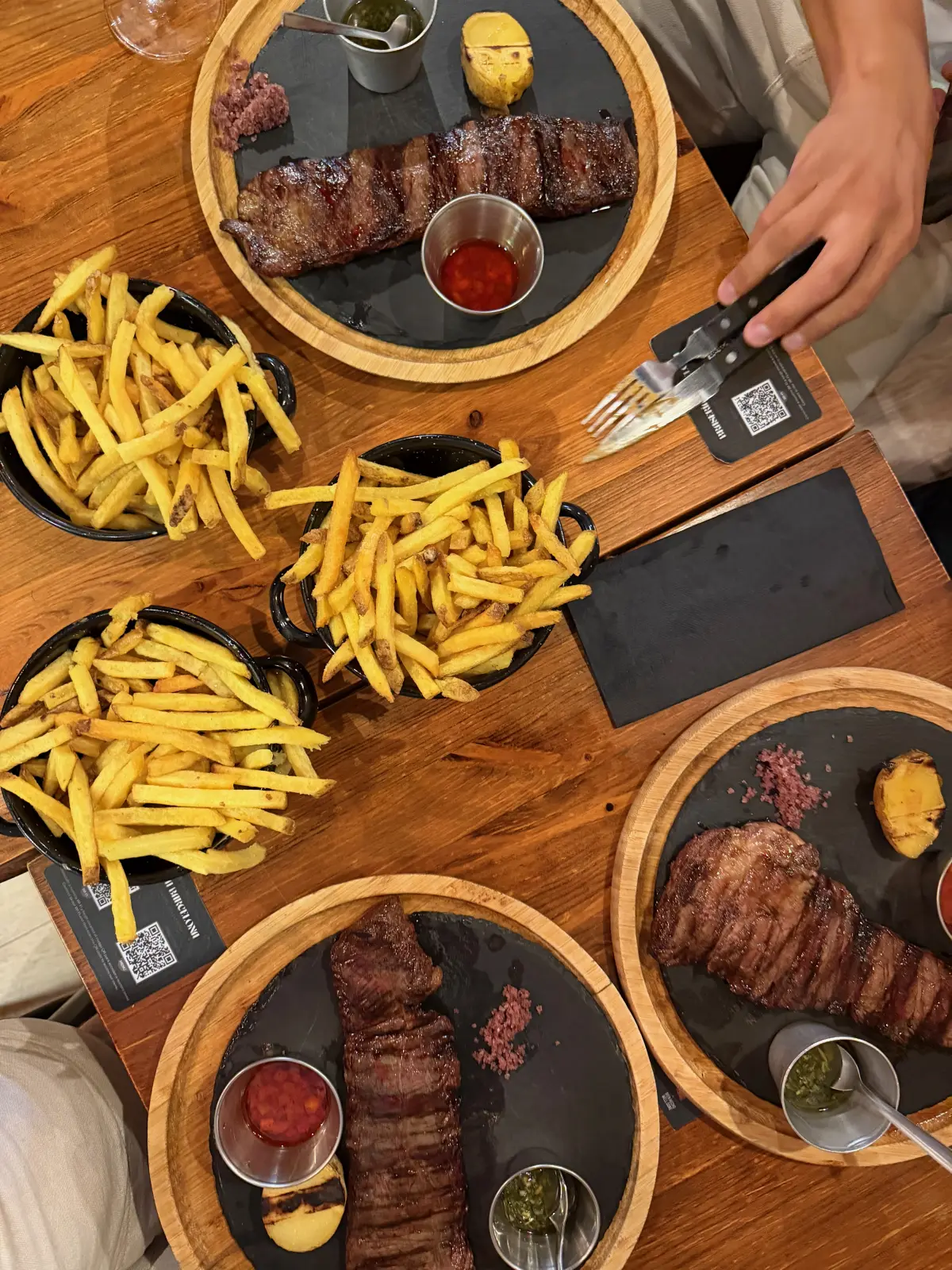
- Grilled steaks in skirt-style cuts, served on wooden boards.
- Chimichurri and a red salsa on the side.
- Fries in small skillets.
A guide to Argentinian cuts
Argentinian menus use cut names that don’t always match the ones used in Spain, the UK or the US. Here are the most common:
- Entraña: skirt steak, a long, thin cut from the diaphragm. Full of flavour and best cooked quickly over high heat.
- Vacío: flank, a juicy cut with a layer of fat that crisps on the grill.
- Bife de chorizo: sirloin or strip steak, thick and with a strip of fat along one side. Nothing to do with chorizo sausage.
- Ojo de bife: ribeye, well marbled and tender.
- Lomo: tenderloin, the leanest and most tender cut.
- Asado de tira: short ribs cut across the bone into strips.
- Picanha (also called tapa de cuadril): rump cap, with a thick layer of fat on top.
Grills also often serve chorizo (fresh pork sausage), morcilla (blood sausage) and provoleta, a thick slice of provolone cheese grilled until it melts.
What is chimichurri?
Chimichurri is the classic Argentinian sauce for grilled meat. It is made with finely chopped parsley, garlic, oregano, chilli flakes, vinegar and oil. It is sharp, herby and slightly spicy, and it cuts through the richness of the beef. Each grill has its own version, and many serve it alongside other sauces so you can mix and match.
How to order at a parrilla
- Know your doneness. In Spanish: poco hecho (rare), al punto (medium), muy hecho (well done). Argentinian grills usually recommend al punto for most cuts.
- Share boards. Ordering a few cuts for the table is the best way to compare them.
- Start with starters. Empanadas, provoleta or a sausage are traditional before the steaks.
- Keep sides simple. Fries and a salad are classic companions.
- Pair with red wine. Malbec is Argentina’s signature grape and the traditional match for grilled beef.
Good to know
- Location: Carrer d’Aragó 364, in the Eixample.
- Cuisine: Argentinian grill, with steaks served on wooden boards.
- Popularity: one of the most-reviewed grills in Barcelona, so booking ahead is sensible.
- For groups: shared boards make it a good choice for a group dinner.
About this part of the Eixample
Carrer d’Aragó is one of the main traffic arteries of the Eixample, crossing the district from one side to the other. This stretch lies in the Dreta de l’Eixample, the right-hand side of the grid, between Passeig de Gràcia and the area around Sagrada Família.
The Eixample was planned in the 19th century by the engineer Ildefons Cerdà, with its regular blocks and cut-off corners called xamfrans. It is full of modernist buildings, and some of the most famous are within walking distance.
Nearby places worth combining with a meal here:
- Mercat de la Concepció, a 19th-century market known for its flower stalls, on Carrer d’Aragó itself.
- Passeig de Gràcia, with Casa Batlló and Casa Milà (La Pedrera).
- Sagrada Família, Gaudí’s basilica, a pleasant walk away.
- Passeig de Sant Joan, a wide, tree-lined boulevard with terraces.
Getting there
- Girona (metro line L4): a short walk.
- Passeig de Gràcia (metro lines L2, L3 and L4, plus Rodalies trains): within walking distance.
- Verdaguer (metro lines L4 and L5): also close.
Best time to visit
Spanish dinner times are late, and the most popular grills in Barcelona are often full from mid-evening onwards, particularly at weekends. Booking ahead is the easiest way to avoid a wait. Lunch is a good alternative if you want a calmer meal, and a big steak at midday fits the Spanish habit of making lunch the main meal of the day.
What Google reviewers say
Google rating: 4.8 out of 5 from 17,611 reviews (October 2026).
With more than 17,000 reviews and a 4.8 average, Braseria Barcelona is one of the most-reviewed grills in the city, and its rating stays high across that very large number of reviews.
Verdict
My rating: 2 out of 5. Despite its huge following on Google, Braseria Barcelona did not live up to the hype for me. It is easy to reach in the Eixample, but with so many Argentinian grills and steakhouses nearby, it is worth comparing a few before you book.
FAQ
Where is Braseria Barcelona? At Carrer d’Aragó 364, in the Eixample.
What kind of food does Braseria Barcelona serve? Argentinian grill, with grilled steaks served on wooden boards with sauces and sides.
What is entraña? Skirt steak, a thin, flavourful cut from the diaphragm, popular at Argentinian grills.
What is chimichurri? An Argentinian sauce of parsley, garlic, oregano, chilli, vinegar and oil, served with grilled meat.
Do you need to book Braseria Barcelona? It is a good idea, as it is one of the most popular grills in the city, especially in the evenings and at weekends.
What is the nearest metro station to Braseria Barcelona? Girona (L4) is a short walk away. Passeig de Gràcia and Verdaguer are also close.