Walter Ponce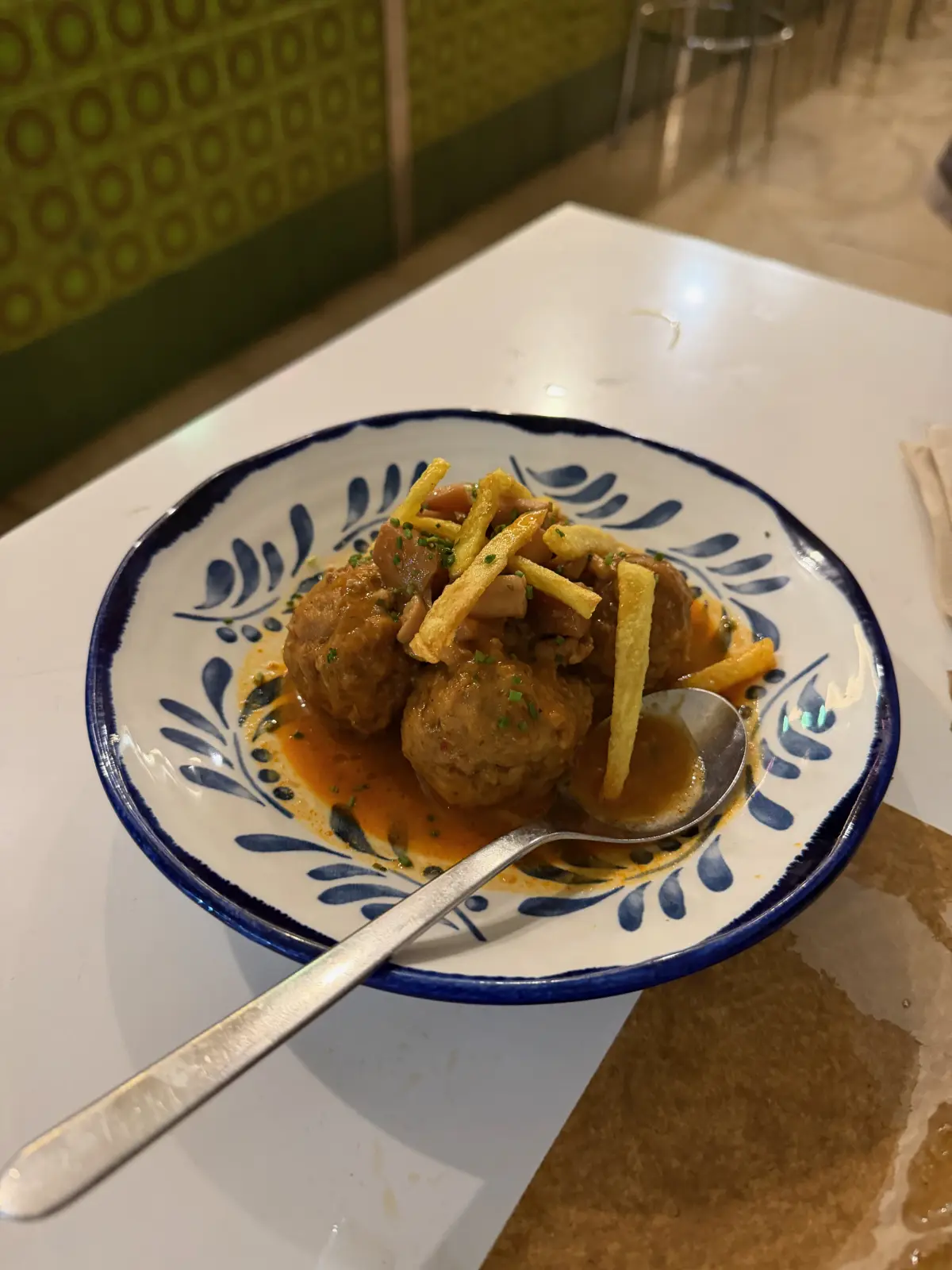
Gràcia is full of trendy brunch spots and new openings, but some of its best meals are still served in the old-school places that have been feeding the neighbourhood for years. Restaurant Santa Magdalena, on the small street of the same name just off Gran de Gràcia, is one of them: a long-standing local restaurant known for traditional Catalan cooking.
We went for lunch last Saturday.
What we ordered
We kept it classic and shared three dishes:
- Croquettes, golden and crisp, served with a small dish of olives.
- Macarrons gratinats, baked macaroni with a browned cheese crust, served in its own pan.
- Mandonguilles, Catalan meatballs in a rich sauce with fried potatoes.
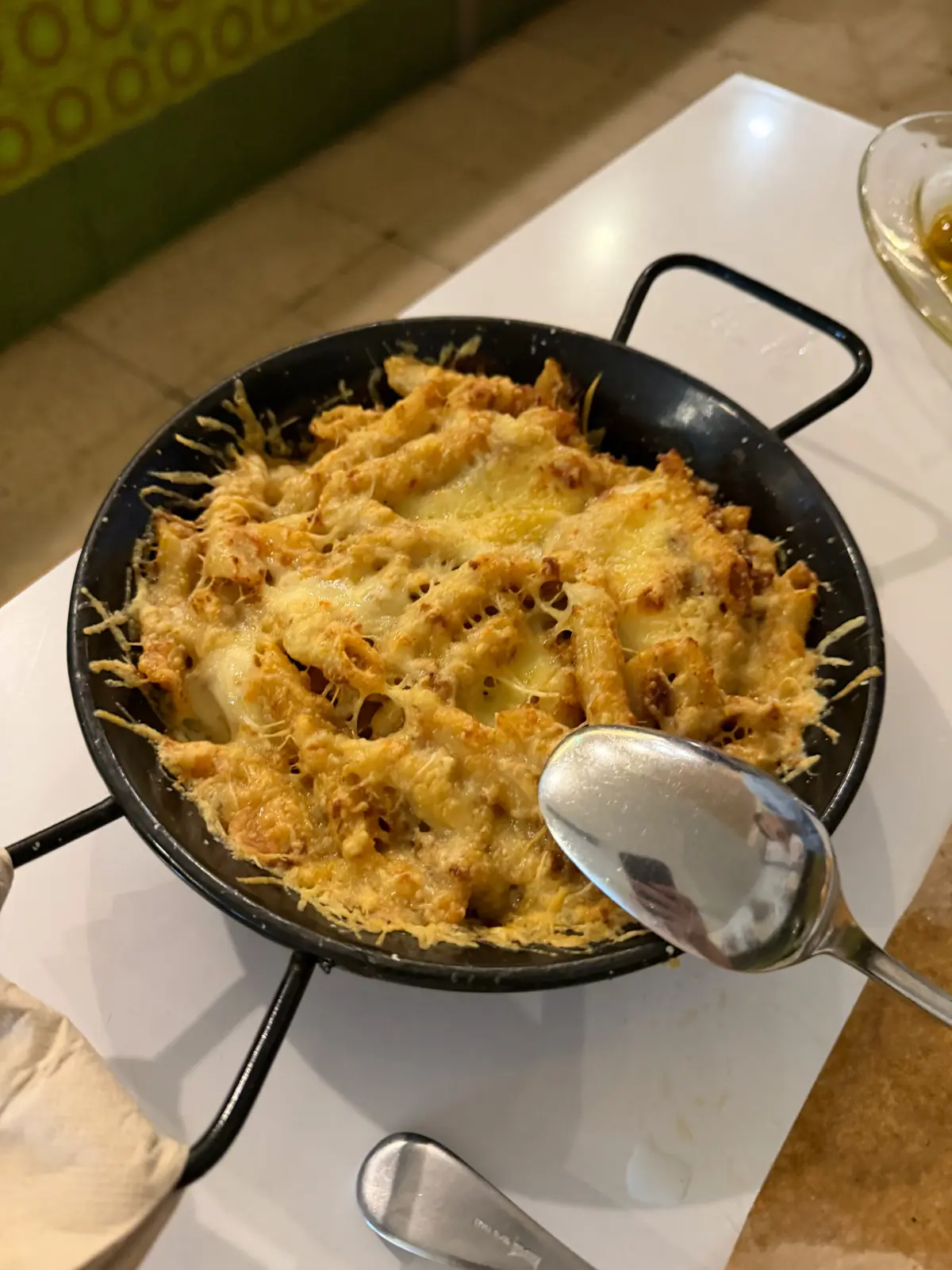
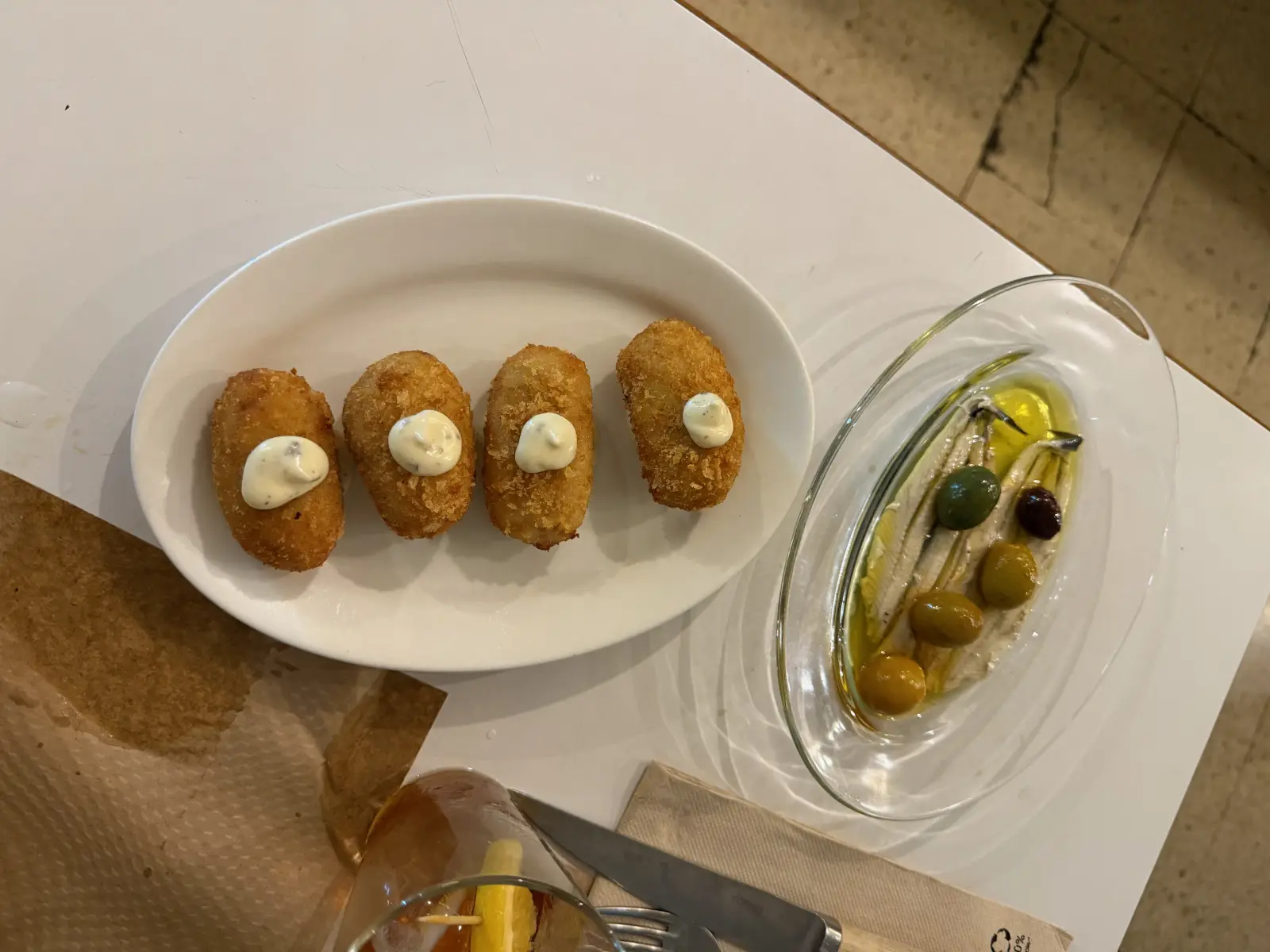
These are the dishes Catalans grew up with at home, and they are a good test of a traditional kitchen.
The dishes, explained
If you are new to Catalan home cooking, here is what the menu classics are:
- Croquetes: creamy béchamel croquettes, usually with ham, chicken or the leftovers of a stew, breaded and fried. Every family claims the best recipe.
- Macarrons gratinats (or macarrons a la catalana): macaroni baked with a sauce of minced meat, sausage, tomato and onion, then topped with cheese and grilled until golden. A Sunday-lunch classic in Catalonia.
- Mandonguilles: meatballs of pork and beef, braised in a tomato and onion sauce. They are often cooked with mushrooms or cuttlefish (mandonguilles amb sípia), and served with fried potatoes.
- Fricandó: a slow-cooked veal stew with mushrooms, one of the dishes the restaurant is best known for.
- Canelons: Catalan cannelloni, filled with roast meat and topped with béchamel, traditionally eaten on 26 December (Sant Esteve) but found on menus all year.
The place
Santa Magdalena is a small, traditional restaurant with a family feel, the kind of place where the waiters take time to explain the dishes. It is a neighbourhood restaurant rather than a tourist one, which is part of the appeal.
What Google reviewers say
Google rating: 4.4 out of 5 from 610 reviews (October 2026).
Reviewers describe great food at a good price, very friendly and attentive staff, and a relaxed, family atmosphere. The Catalan food in general is the most-mentioned theme, followed by the croquettes, the fricandó and the cannelloni. Several mention that the waiters patiently explain the dishes. A minority came with very high expectations for a well-known local restaurant and found it good rather than exceptional.
Gràcia: the neighbourhood
Gràcia was an independent town until it was annexed by Barcelona in the late 19th century, and it still feels like a village inside the city: narrow streets, small squares and a strong local identity.
Before or after lunch, walk through:
- Plaça de la Vila de Gràcia, with its clock tower.
- Plaça del Sol, the liveliest square, full of terraces.
- Plaça de la Virreina, quiet and pretty, in front of the church of Sant Joan.
- Carrer de Verdi, with independent shops, bars and the Verdi cinema.
- Casa Vicens, Gaudí’s first house, a short walk north-west.
In mid-August, the Festa Major de Gràcia turns the streets into a competition of handmade decorations, with concerts every night.
Getting there
- Metro: Fontana (L3) is the closest station, a few minutes’ walk. Diagonal (L3/L5) is about ten minutes away.
- FGC: Gràcia station is also within walking distance.
- On foot: from Passeig de Gràcia, walk up Gran de Gràcia; Carrer de Santa Magdalena is a small side street near Fontana.
What to drink
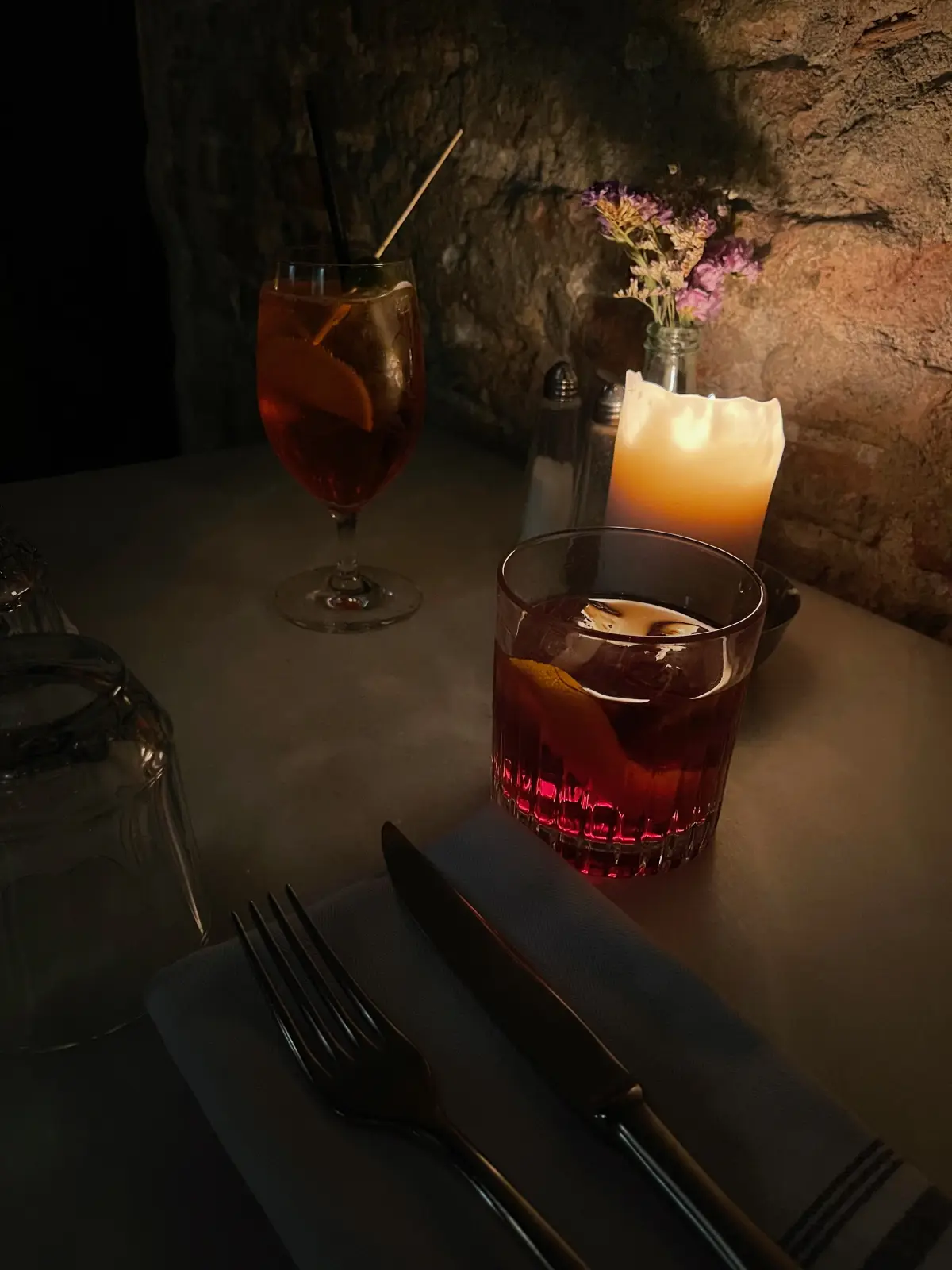
Traditional Catalan cooking pairs naturally with local wine. Look for reds and whites from Catalan regions such as the Penedès, Priorat, Montsant or Empordà, many of them available by the glass in neighbourhood restaurants. Cava, the sparkling wine made mostly in the Penedès, is a classic with croquettes and starters. Before lunch, Barcelonians often go de vermut: a glass of red vermouth with an olive and a slice of orange, usually on a weekend around midday.
When to go
Lunch is the main meal of the day in Catalonia, served from around 1:30pm to 4pm, and dinner rarely starts before 8:30 or 9pm. Weekend lunchtimes are the busiest and the liveliest, when local families fill the tables. For a quieter meal, go on a weekday or arrive early.
Tips
- Book ahead for weekend lunch, as the room is small and popular with locals.
- Order to share. Catalan home cooking works best with a few dishes in the middle of the table.
- Lunch menus: many traditional restaurants in Barcelona offer a menú del dia on weekdays, which is often the best value. Ask what is available.
- Leave room for dessert: crema catalana and mel i mató (fresh cheese with honey) are the classic Catalan finishes.
Verdict
My rating: 4 out of 5. Good food, good service and good prices: a reliable local restaurant for classic Catalan cooking in the middle of Gràcia. Order a few traditional dishes to share, like the croquettes, macaroni or meatballs, and take your time.
FAQ
Where is Restaurant Santa Magdalena? At Carrer de Santa Magdalena 6, in Gràcia, Barcelona, close to Fontana metro station.
What kind of food does Santa Magdalena serve? Traditional Catalan cooking: croquettes, macaroni gratin, meatballs, fricandó, cannelloni and other home-style classics.
Is Santa Magdalena expensive? Reviewers describe it as good value for the quality, and it is priced as a neighbourhood restaurant rather than a tourist one.
What is fricandó? A traditional Catalan stew of thin slices of veal slow-cooked with mushrooms in a rich sauce.
Do you need to book? It is recommended, especially for weekend lunch.
What else is there to do in Gràcia? Walk the squares (Plaça del Sol, Plaça de la Virreina, Plaça de la Vila), browse the shops on Carrer de Verdi, and visit Gaudí’s Casa Vicens.